
www.copingcourageously.com
Get a copy for you and gift a copy to someone you love.
The Dos and Don’ts of Creating an Excellent Advance Directive
Advance directives are meant to guide care, but too often they create confusion instead. A vague or poorly written advance directive can leave families and clinicians struggling to interpret a patient’s wishes in critical moments.
In my The Integrative Palliative Podcast, I break down the Dos and Don’ts of creating an excellent advance directive —one that actually helps, rather than causes frustration or uncertainty.
Click the button below to listen. It will be a good use of 20 minutes!
My dad felt trapped in his failing body and was terrified of becoming dependent. He had lived a long and happy life and he wasn’t afraid of death. His doctors told him that his condition would only worsen and he shared that he didn’t want to prolong his dying. He wanted Medical Aid in Dying, but didn’t have access to it because of where he lived.
My episode of The Integrative Palliative Podcast is called Medical Aid in Dying: A Tale of Autonomy and Desperation.
Get the podcast episode here
It is a vulnerable and painful story.
It is the story of my dad’s desperation that led him to make a decision that caused pain for him and pain for those who love him.
If he had had access to Medical Aid in Dying, his last moments on Earth could have been peaceful instead of painful. He could have felt love instead of fear. He wouldn’t have had to be alone.
As a palliative care physician, I have always been in support of access to Medical Aid in Dying, because it simply made sense to me to give people autonomy over the last part of their life. As a daughter of a gentle, creative, and fiercely independent man who ended his life because he felt trapped by his ailing body, I am broken-hearted that so many people in this country are suffering like he suffered.
Forcing a person who wants autonomy over the end of life to choose between dying slowly or figuring out how to end one’s life is simply awful. Leaving families to sort out self-imposed aid in dying from “suicide” is cruel. From death certificates to life insurance to telling the neighbors what happened, the way that a terminally ill person leaves this Earth matters.
Access to Medical Aid in Dying matters.
My dad was a beautiful soul. I wish he had had an easier exit from this life.
- Someone else might be facing a similar situation and I don’t want them to feel alone
- Shame grows in darkness
- I want to walk my talk and openly discuss the things that most people don’t talk about
- I want all people to have access to Medical Aid in Dying and perhaps sharing our story will help manifest this
Let’s keep talking about the things that are hard to talk about.
Delia
P.S. If this story touches you please respond to this email. We are all just “walking each other home”.
I am an experienced integrative palliative medicine physician and medical educator. I provide inpatient and outpatient integrative palliative care and integrative oncology at the Integrative Palliative Institute at the Greater Baltimore Medical Center.
Prior to starting at GBMC, I was the Associate Director and Director of Education for the University of Maryland School of Medicine’s Center for Integrative Medicine and the former Division Chief of Integrative Palliative Medicine at Greater Baltimore Medical Center/Gilchrist.
I have extensive experience in medical education and program development. I teach on the topics of integrative medicine, palliative care, and healthcare provider wellness at the University of Maryland School of Medicine and Graduate School. I am the Founder of the Integrative Palliative Institute and host of The Integrative Palliative Podcast.
As a thought leader in the field of integrative palliative medicine, I specialize in whole-person care for families facing serious illness, using all the tools that work.
As a person who has been a caregiver, I understand, from the inside, the fear, stress, and overwhelm that people face when someone they love is unwell.
Visits with me will be covered by insurance. We are putting together an army of volunteers to provide some services free of charge. Others, such as massage and acupuncture, will have a cost associated with them – but only enough to sustain the program. We are a non-profit institution that is highly mission-based.
I have been voted a “Top Doctor” by my peers and won awards for teaching excellence. As a sought-after lecturer, I have been invited to teach at organizations such as Johns Hopkins Hospital, the University of San Francisco Medical School, the University of Maryland Graduate School, and School of Pharmacy and The American College of Rheumatology. I have published chapters in the textbooks Practical Management of Pain and Families in the Intensive Care Unit and serve as an Executive Editor for McGraw Hill Education. I am an adjunct Assistant Professor at the University of Maryland, Baltimore.
I am available for speaking engagements and media interviews. To schedule an interview or speaking engagement, visit www.DrChiaramonte.com.
Would You Share Your Opinions with Me?
I support people who have ill or aging loved ones and also teach physicians and other clinicians how to provide heart-centered care to seriously ill people without losing themselves.
I am very interested in your perspective about what works and what doesn’t. What do you need from your doctors? What do you wish were different? What works well?
I am passionate about improving the care of seriously ill patients from the perspective of caregivers, clinicians, and the clinician-patient-family relationship.
Would you mind filling out this brief survey? It has only 4 questions and it will help me help physicians to help patients. Please click below to fill out the brief survey
Fill Out The Survey
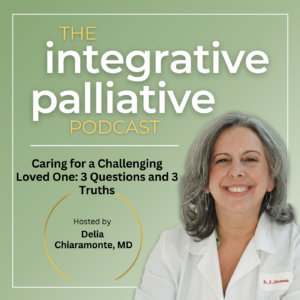
Caring for any loved one who is ill or aging is tough. It can be even more complicated if you have a challenging relationship with them.
You may be trying your hardest to be a “good” caregiver, but also feeling depleted and exhausted.
In this episode of The Integrative Palliative Podcast, you will find three questions to ask yourself and 3 truths to ponder.
More about my book …
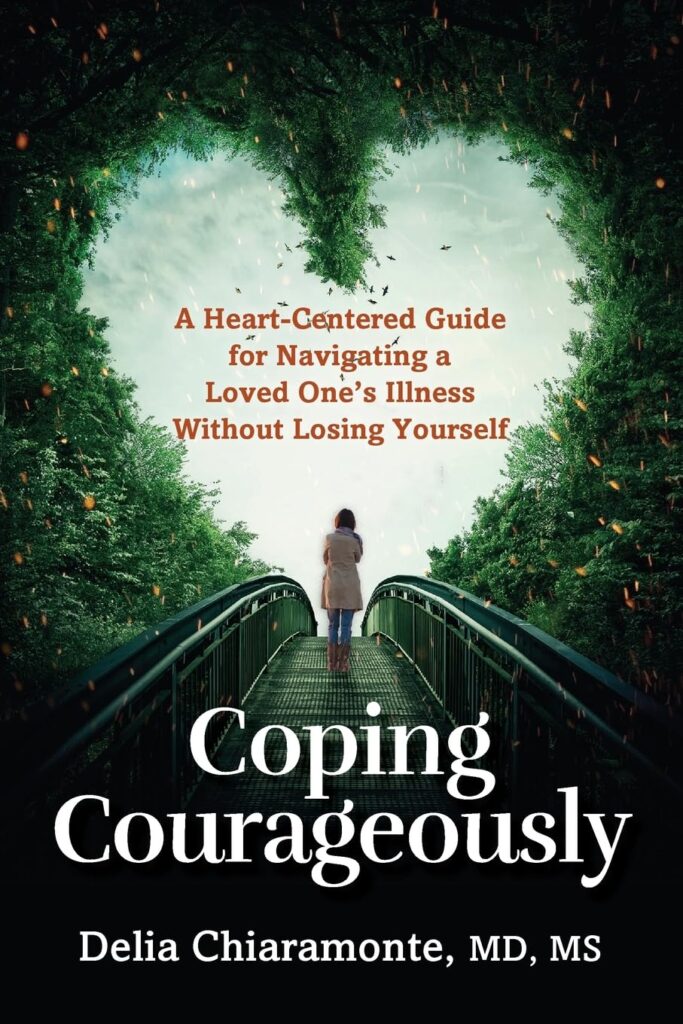
Are you stressed and exhausted because someone you love is seriously ill? Do you wish you felt less overwhelmed and more certain about how to help? Coping Courageously will be your guide. You will learn …
- The most important things to do, and not do, when a loved one is sick
- Insider strategies for getting the best medical care
- A simple and effective approach for managing your own stress
- Skills to confidently talk about tough topics
You will be touched and inspired by the stories of my patients. More importantly, Coping Courageously will give you the peace of mind, confidence, and tools to effectively support your loved one without depleting yourself.
Top Reviews
ACCEPTS VIRTUAL CLIENTS
Integrative Palliative Institute
Podcast Host: The Integrative Palliative Podcast
Executive Editor, McGraw Hill
Adjunct Assistant Professor, Univ of MD School of Pharmacy & Graduate School
www.integrativepalliative.com
443-695-4015
Leave a Reply