The Importance of Early Detection in Ovarian Cancer

MY STORY
Part 1: What Are The Signs of Ovarian Cancer
I have been a medical professional for over 30 years and consider myself to be quite knowledgeable about diseases, symptoms, and risk factors, especially for the population with whom I have worked the most – middle aged and older adults.
Before I was diagnosed with ovarian cancer, I knew some information about it. Mostly, I was aware that ovarian cancer often impacts people over 50 and it is difficult to treat effectively. Despite knowing the facts, it never occurred to me that I would ever be one of those people. Prior to my diagnosis, I would characterize my health as excellent. I had been a physically active woman for the last 50 years, eating a healthy diet and weighing in at the same weight I was in high school. Like so many others diagnosed with ovarian cancer, I was completely shocked to receive this news.
I quickly found out how much I didn’t know.
Recent statistics from the American Cancer Society reveal that ovarian cancer ranks as the 15th most common cancer and the sixth leading cause of cancer-related deaths among women. Furthermore, a woman’s lifetime risk of developing ovarian cancer is reported to be 1 in 87.
I asked myself how I could have a cancer and not know it.
I discovered ovarian cancer is often diagnosed at an advanced stage because early symptoms can be subtle or absent, making early detection difficult. Vaginal bleeding was my only symptom. This led me to call my gynecologist, who quickly ordered a vaginal ultrasound which found a large ovarian tumor. Based on my oncologist’s recommendations, I decided to undergo a total hysterectomy. My pathology report indicated that I had a highly aggressive tumor and chemotherapy was ordered.
I was fortunate enough to get an early diagnosis and am cancer free at this time.
Here are some common symptoms that may be associated with ovarian cancer:
- Pelvic or abdominal pain: Persistent pain or discomfort in the pelvic or abdominal region.
- Bloating: Feeling consistently bloated, especially if it persists for more than a few weeks.
- Trouble eating or feeling full quickly: A sudden change in appetite, difficulty eating, or feeling full despite eating very little.
- Frequent urination: Increased urgency to urinate and more frequent bathroom trips.
- Unexplained vaginal bleeding: Report this to your gynecologist immediately.
- Changes in bowel habits: Any significant changes in bowel habits, including constipation or diarrhea.
- Unexplained weight gain or loss: Sudden and unexplained changes in weight can be a symptom of various health issues, including ovarian cancer.
- Fatigue: Feeling unusually tired or having low energy levels consistently.
- Back pain: Pain in the lower back.
It is also crucial to note that these symptoms can be indicative of various conditions, and experiencingthem does not necessarily mean someone has ovarian cancer. However, if these symptoms are persistent and unexplained for several weeks, it is important for individuals to consult with a healthcare professional, particularly a gynecologist.
Part 2: Ovarian Cancer — What Are The Chances?
Early detection is associated with higher survival rates.
In Part 1, I shared the statistic that a woman’s lifetime risk of developing ovarian cancer is reported to be 1 in 87. However, I learned there are factors which can increase an individual’s risk.
For example, women of Ashkenazi Jewish descent, like me, are at a higher risk. For this reason, it is vital to know your familial history. A family history of breast, uterine, ovarian, or colorectal cancer increases your risk.
Your family medical history can provide valuable information about potential genetic or hereditary risks for various health conditions, including ovarian cancer. Many health conditions, including certain types of cancer, can have a genetic component.
The BRCA1 and BRCA2 genes are critical in understanding the genetic risk factors for certain cancers, including breast and ovarian cancers. Mutations in these genes, or in other genes such as PAL2 or RAD51C/D, can significantly increase the risk of developing these cancers. Individuals with a strong family history of breast and ovarian cancers should consider genetic testing to identify mutations in these genes. Genetic counselors are experts who can help you understand your genetic testing results, clarify risks for additional cancers, and support you in the process of sharing your results with relatives and children.
Mutations in BRCA1 and BRCA2 are about 10 times more common in those who are Ashkenazi Jewish than those in the general population. The lifetime ovarian cancer risk for women with a BRCA1 mutation is estimated to be between 35% and 70%.
Age is a significant risk factor in developing ovarian cancer, and the risk tends to increase with age, especially after menopause. However, it is important to note that having one or more risk factors does not guarantee that an individual will develop ovarian cancer, and many women with ovarian cancer have no known risk factors.
Factors that may increase your risk for ovarian cancer:
- A family history of ovarian, breast, uterine, or colorectal cancer
- Increased age
- Genetic mutations in your BRCA1 or BRCA2 genes
https://www.cancer.gov/about-cancer/causes-prevention/genetics/brca-fact-sheet - Being post-menopausal
- Ashkenazi Jewish descent
Factors that can decrease your risk for ovarian cancer:
- The use of oral contraceptives
- Pregnancy
- Breastfeeding
Be vigilant and advocate for your health and your health care.
Be attuned to any unusual or persistent symptoms mentioned above and, if they persist for more than a few weeks, take proactive steps to seek medical attention. Your awareness and proactive approach can make a significant difference in early detection and overall health outcomes.
Knowing the symptoms and risk factors associated with ovarian cancer coupled with undergoing annual gynecological check-ups can lead to a diagnosis at an earlier, more treatable stage. Furthermore, we can all advocate for research to enhance screening methods and develop more effective treatments to minimize the impact of ovarian cancer on women’s health.
If you or someone you care about has been diagnosed with ovarian cancer, below are some resources I have found valuable:
- Ovarian Cancer Research Association Foundation; https://ocrahope.org
- National Ovarian Cancer Coalition; https://ovarian.org
- The National Cancer Institute; https://www.cancer.gov
- The Clearity Foundation; https://www.clearityfoundation.org
- Nancy’s List; https://nancyslist.org
Nancy’s List is one of the most comprehensive and valuable catalogs of resources I have come across. - The Society of Gynecologic Oncology; https://www.sgo.org
- Center for Advancement of Cancer Education; https://beatcancer.org
Sources:
- American Cancer Society. (2021). Ovarian Cancer Risk Factors.
- Centers for Disease Control. (2024). Jewish Women And BRCA Gene Mutations.
- Ovarian Cancer Research Alliance. (ND). Causes And Risk Factors.
- MD Anderson. (2017). How To Lower Your Ovarian Cancer Risk.
© Linda Winkler Garvin, MSN
Health Advocacy & Consulting
President & Founder, Patient Advocate Bay Area, Inc.
Ambassador & Advocate for The Clearity Foundation
STS Program for OCRA
Writer for Brighter Magazine
[email protected]
(510) 520-0186
patientadvocatebayarea.com
Nearly Half of Women With Ovarian Cancer
Are NOT Receiving Critical Genetic Testing
Posted on
Genetic testing plays a pivotal role in the fight against ovarian cancer, particularly in identifying BRCA mutations and other genetic markers that guide treatment with precision therapies such as PARP inhibitors. Key findings of the OCRA analysis show that only 52% of women diagnosed with ovarian cancer between 2016 and 2023 received genetic testing, despite universal recommendations that all women with this disease should be tested. This means that almost half of ovarian cancer patients are not receiving a critical diagnostic tool that could impact their care.
The data also reveal significant gaps based on insurance coverage and age. Women with commercial insurance were 37% more likely to undergo genetic testing than those with public insurance. On average, 62% of patients with commercial insurance received genetic testing compared to just 38% on Medicare FFS and 40% on state Medicaid. Additionally, younger patients were tested at significantly higher rates than older patients, with pediatric patients tested more than twice as often as patients aged 65 and older.
These findings underscore the urgent need
to ensure that every woman
diagnosed with ovarian cancer
has access to genetic testing
and the potentially life-saving treatment insights
it can provide.
… Audra Moran, President and CEO of OCRA
The fact that nearly half of all ovarian cancer patients
are not being tested is unacceptable,
and it is particularly concerning
that older women and those on public insurance
face the greatest barriers.
At OCRA, we are committed
to addressing these disparities
and advocating for policies
that improve access to care for all women
facing ovarian and gynecologic cancers.
While tests for BRCA and other mutations were once only recommended for women with a family history of ovarian cancer, since 2014, leading health organizations, including the American College of Obstetricians and Gynecologists (ACOG) and the Society of Gynecologic Oncology (SGO), have recommended that all women diagnosed with ovarian cancer receive genetic counseling and be offered genetic testing.
Yet, the data reveal systemic obstacles, including socioeconomic and healthcare access disparities, that disproportionately affect women over 65 and those who rely on public health insurance.
OCRA is dedicated to bridging this gap by providing free genetic testing resources and advocating for increased funding for gynecologic cancer research and education along with expanded Medicaid and Medicare coverage for genetic testing and treatment. These efforts are part of OCRA’s broader mission to advance equitable care and improve outcomes for all women impacted by ovarian and gynecologic cancers.
With no early detection test – and important research demonstrating that, in most cases, detecting ovarian cancer well before symptoms begin still does not improve mortality – knowing one’s own genetic risk for ovarian cancer is critical. Genetic testing can identify inherited mutations that increase risk, enabling one to take preventative measures such as surgery.
The study is based on data compiled by Komodo Health, a leading healthcare technology company that leverages its extensive Healthcare Map™ to analyze real-world patient journeys.
The Healthcare Map™ is the industry’s largest and most comprehensive database of de-identified patient-level data, encompassing insights from over 330 million patients.
By using advanced analytics and innovative software solutions, Komodo Health enables organizations to uncover meaningful insights that drive improvements in healthcare access, equity, and outcomes.
OCRA is the largest global organization dedicated to combating ovarian and all gynecologic cancer while supporting patients and families.
Since its founding in 1994, OCRA has invested $128 million in scientific breakthroughs, helped to secure $3.8 billion in federal research funding, and supports 95,000 individuals annually through its programs.
www.ocrahope.org
Talk About It …
Daily Health History & Ovarian Cancer
Source: National Ovarian Cancer Coalition
Understanding your family’s health history is important for your own health. If you find a history of ovarian, breast, or colorectal cancer, you may have an increased risk for ovarian cancer. You might share an inherited genetic mutation (BRCA1, BRCA2) that can cause ovarian cancer.
These mutations can be passed down from either parent. If you find this to be true, there are things you can do to reduce your risk. If you have children, discuss their risk with your doctor. This information can also help guide treatment if you do develop cancer.
Talking to your relatives may be hard to do.
• Your relatives may not be open to talking about family cancer risk.
• Some may wish to keep their health history private.
Consider the viewpoints of everyone when having these discussions.
Consider having the conversation at the next family event.
Consider having a private one-on-one conversation.
When speaking to family, here are some tips:
• Explain why this information is important.
• Educate your family about genetics and risk.
• Be open about your own health.
To understand your hereditary cancer risk, which is cancer caused by an inherited genetic mutation, you will need to ask your relatives the following medical questions:
• Has anyone in our family (immediate or distant) been diagnosed with cancer?
• If so, what kind of cancer? At what age were they diagnosed?
• Do we have any medical records or documents?
• For relatives who have passed, what were the causes of death? At what ages did they pass away?
• What is our family’s ancestry?
• Has anyone in the family had genetic testing? If so, do we know the results?
The more closely related you are to someone in your family, the more likely you will have similar DNA, so start the conversation with your first-degree relatives.
• First-degree relatives: parents, siblings, and children
• Second-degree relatives: are half-siblings, uncles, aunts, grandparents, grandchildren, nieces, and nephews
• Third-degree relatives: cousins, great grandparents, great aunts, and great uncles
Talk with both the women AND the men in your family. It is possible that genetic risk for ovarian cancer could be passed on by your father’s side of the family.
National Ovarian Cancer Coalition
Ovarian.org
1 – 888 – Ovarian
[email protected]
Bay Area Cancer Connections
888 222 4401
Provides financial help to breast and ovarian cancer patients under age 40.
Best Face Forward Financial Assistance Program
Best Face Forward 2.0 services include financial subsidies for wigs (cranial hair prosthesis), cold caps (scalp cooling treatment), and tattooing* (three-dimensional micropigmentation of the nipple and areola), tattooing* of the eyebrows (microblading), and yoga (where applicable). Additionally there are complementary and holistic offerings such as meditation and yoga.
*Available in select locations.
To be eligible for financial subsidy you must:
Be diagnosed with breast or ovarian cancer, or be considered high risk for breast or ovarian cancer, with documentation to support this from a health care provider
Meet our financial eligibility guidelines
Provides services and subsidies for eligible individuals for non-medical services that are critical to a woman’s quality of life and body image, and that are only partly covered by insurance companies, if at all.
CancerCare
CancerCare provides free professional support services for people affected by ovarian cancer, as well as ovarian cancer treatment information and additional resources.
We offer a Women’s Cancers Program to help support female-identifying individuals coping with cancer.
Colorado Ovarian Cancer Alliance
A diagnosis of gynecologic cancer can be a very challenging life-altering experience. We are committed to assisting you, and those supporting you, in managing your experience through emotional, social, and financial assistance programs.
We have collaborated with a nationally recognized speaker, Sami Mansfield, to bring you an informative webinar on Healthy Lifestyles.
You can find a calendar of all our support and education options here.
Free Support and Education Meetings
- Early-Stage (I & II) Gyn Cancer Support Group (1st & 3rd Wednesdays at 4:00 pm)
- Monthly In-Person Gyn Cancer Support Group at Sky Ridge (2nd Monday at 12:00 noon)
- Weekly Education Series for Recently Diagnosed (0-6 months) for Survivors and their Caregivers
Newly Diagnosed Educational Classes
These weekly education series are for recently diagnosed survivors and their caregivers and provide information needed to effectively navigate the early months of a diagnosis and treatment, including the initial adjustment, clinical guidance about managing treatment and side effects, coping strategies, and practical resources.
(Recommended for anyone within 6 months of diagnosis)
Live, Interactive 4-Part Virtual Education Series for Survivors & Caregivers with a Recent Gynecologic Cancer Diagnosis
Weekly on Wednesdays 12:00 – 1:00 pm
You can attend some or all classes in no particular order.
Topics include:
Week 1 – Adjusting to a New Cancer Diagnosis
Week 2 – Managing Treatment & Side Effects
Week 3 – Stress, Empowerment & Connection
Week 4 – Practical Concerns & Resources
Group Support
Connect with others going through a gynecologic cancer diagnosis in a professionally facilitated supportive setting. Survivors in all phases of the cancer experience are welcome: newly diagnosed, in treatment, after treatment, in recurrence, and long-term survivors. These groups provide peer support and are not a substitute for mental health therapy.
Nicki’s Circle peer support groups are professionally facilitated and provide a safe space to connect with other survivors about how you are coping with cancer: the stress, emotions and uncertainty.
Attend any of the following drop-in groups to check-in with others, and share valuable insights and resources!
Most meetings are virtual via Zoom. The Monthly Wednesday group meets in person.
Weekly Groups – All gyn cancers/All stages
Monday Evenings (6:00-7:30 pm)
Tuesday Mornings (9:00-10:30 am)
Bi-Monthly Group – Stage I or II gyn cancers
Early-Stage – 1st & 3rd Wednesday (4:00-5:00 pm)
Monthly Groups – All gyn cancers/All stages
Monthly Monday – 1st Monday (11:30 am-1:00 pm)
Monthly IN-PERSON at Sky Ridge 2nd Wednesday (12-1:30 pm)
Individual Support
You can speak with a licensed counselor who is part of our CGCA Individual Support Program (ISP). We offer four free sessions with a therapist to support you. Counseling focuses on living with cancer and does not address long-term mental health concerns.
Early-Stage Support
Early-Stage support group is designed for those who have been diagnosed with stage I or II gynecologic cancer and are seeking support and connection with others living with experiences unique to this phase of survivorship.
Insurance and Financial Support
Carol’s Wish Financial Advocates can help look for ways to reduce out-of-pocket costs.
This program is available to all Coloradans diagnosed with gynecologic cancer, regardless of income, insurance coverage, or citizenship status.
Information Support
When you sign up for our newsletter, you will be notified of educational offerings throughout the year. You can also find the CGCA Resource Guide on our website. It provides useful tips, information, and resources available locally and nationally.
Our Comfort Kit includes items selected by survivors and friends that can be helpful during reatment and surgery recovery.
Open to Ovarian, Fallopian Tube, and Primary Peritoneal Cancer Patients.
CGCA Cares Grants provide assistance to those dealing with financial hardship due to an ovarian, fallopian tube, or primary peritoneal cancer diagnosis.
The application can be downloaded form our website and includes information about qualification for the program. www.ovariancancercolorado.org/financial-support
Grants may be given to qualified applicants in Colorado for:
Monthly financial assistance for expenses like rent, mortgage, medical insurance premiums, groceries, childcare, transportation, utilities and medical bills
Maximum $500/month up to six months
Medical expense assistance associated with seeing a Gynecologic Oncologist for a first-time or second opinion visit. $500 maximum/one time
Limited transportation assistance to join a clinical research drug trial. $500 maximum/one time
The mission of Colorado Gynecologic Cancer Alliance (CGCA) is to promote awareness and early detection of gynecologic cancers through advocacy and education while providing support to people in Colorado affected gynecologic cancer.
We are here for you.
ACCEPTS VIRTUAL CLIENTS
[email protected]
720-519-3122
www.GynCancerColorado.org
Critters for the Cure
If you are currently in treatment for breast and/or gynecological cancer, in need of financial assistance and live in Maryland, Virginia or Washington, D.C., you may apply for emergency financial funds from Critters for the Cure.
Funds are provided for a variety of expenses, such as (but not limited to) acupuncture, biofeedback, massage & mind-body therapy, scarves, wigs, and anti-nausea medications, as well as transportation to treatment, daycare, medical co-payments, rent assistance, utilities, and even dog walkers.
CFTC does not pay medical bills.
You must be in active treatment to qualify for financial assistance. Active treatment does not include long-term hormonal therapies (including Tamoxifen, Fareston, Arimidex, Aromasin, Femara, Zoladex, Lupron, Megace, Halotestin).
Facing Our Risk of Cancer Empowered (FORCE)
A non-profit organization for women who are at high risk of getting breast and ovarian cancer due to their family history and genetic status, and for members of families in which a BRCA mutation may be present.
FORCE’s website can be a helpful resource for anyone who knows she is at risk, who wonders whether she might be at risk, or who cares about the issues and concerns that women-at-risk face.

Our mission is to improve the lives of individuals and families affected by hereditary breast, ovarian, and related cancers.
With nearly two decades of leadership as the largest national nonprofit organization focused solely on hereditary breast, ovarian, pancreatic, prostate and related cancers (HBOC), FORCE stands apart.
A tireless champion of the HBOC community, FORCE is intensifying efforts to raise awareness of hereditary cancers to the 2.3 million people impacted – many of whom are unaware of their risk.
Created by and for HBOC-affected individuals and families, FORCE was founded on the principle that no one should face hereditary cancer alone. FORCE provides local and national programs providing support, education, advocacy, and research on behalf of the hereditary cancer community.
Cancers that occur because of an inherited mutation are called hereditary cancers. Cancers that are not due to an inherited gene change are called sporadic cancers.
Sporadic cancer and hereditary cancer differ in several ways that may affect health care decisions:
- Hereditary cancers are caused in part by gene mutations passed on from parents to their children. Other blood relatives may share these same gene changes.
- Sporadic cancers are believed to arise from gene damage acquired from environmental exposures, dietary factors, hormones, normal aging, and other influences. Most acquired gene changes are not shared among relatives or passed on to children.
- Hereditary cancers often occur earlier than the sporadic form of the same cancer. Experts often recommend different screening, at a younger age for people with a gene mutation or hereditary cancer in their family.
- Hereditary cancers can sometimes be more aggressive than the sporadic form of the same cancer. For example, hereditary prostate cancers tend to be more aggressive and more likely to spread than sporadic prostate cancers.
- Hereditary cancers may respond to different treatments than sporadic cancers. For example, PARP inhibitors are drugs that were designed to treat cancers associated with BRCA mutations. The agent Keytruda has been approved for treating cancers in people with Lynch Syndrome.
- Individuals who have inherited a gene change may be at a higher risk for more than one type of cancer. For cancer survivors, this may affect cancer treatment options, prevention, or follow-up care.
FORCE accomplishes this mission by creating awareness, supplying information and support to our community, advocating for and supporting research and working with the research and medical communities to help people dealing with hereditary breast, ovarian, and related cancers.
Since 1999, FORCE has been the voice of experience and has empowered cancer survivors and those at high risk for hereditary breast and ovarian cancer.
FORCE provides support, education, and awareness to help those facing hereditary breast and ovarian cancer know their options and make informed decisions. FORCE has taken a leadership role in guiding critical research and policy issues that impact the hereditary cancer community.
ACCEPTS VIRTUAL CLIENTS
16057 Tampa Palms Blvd. W, PMB #373
Tampa, Florida 33647
Toll-free Helpline: 866-288-RISK (7475)
Fax: 954-827-2200
https://www.facingourrisk.org
[email protected]
Karen Swanson Fund
Fulfills a special need or end-of-life request for those with active metastatic breast or ovarian cancer.
The fund is not meant to be used for medical treatment or basic living expenses, but for improving the quality of life during the dying process.
Amounts granted are up to $750.
To receive funds from Bay Area Cancer Connections (BCC) Karen Swanson Fund, you must
(1) have metastatic breast or ovarian cancer,
(2) live in the San Francisco Bay Area, and
(3) not be able to afford this extra expense without the support of this fund.
Call the BCC Helpline at (650) 326-6686 or toll-free 888 222 4401.
Melanie Finley Ovarian Cancer Foundation
A grassroots charitable organization that was incorporated in 2008 to raise money for ovarian cancer awareness and education and to provide direct financial assistance for women being treated for ovarian cancer.
National Ovarian Cancer Coalition
Since 1991, the National Ovarian Cancer Coalition (NOCC) has supported thousands of cancer survivors, delivered millions of educational resources, and connected with dedicated local community members to raise awareness about ovarian cancer.
NOCC is a national advocate for patients, survivors, caregivers, and their families navigating their ovarian cancer journey and remains steadfast in its mission “to save lives through the prevention and cure of ovarian cancer, and to improve the quality of life for survivors and caregivers.”
At the NOCC, our teal team leads with our values and unique experiences to provide support and education across all communities, ensuring that every person is empowered to advocate for their health.
Everything changes when you or a loved one is diagnosed with ovarian cancer.
Emotions are high.
Your world feels out of control, filled with medical tests, surgical procedures, treatments, and unfamiliar terms.
It is a scary, overwhelming time, but one thing is for sure …
YOU ARE NOT ALONE.
OUR MISSION
To save lives through the prevention and cure of ovarian cancer and to improve the quality of life for survivors and their caregivers.
OUR VISION
We envision a future where no one ever loses her life to ovarian cancer.
OUR CORE VALUES
Connection, Inclusivity, Perseverance, Authenticity, Compassion, and Empowerment
Nearly 22,000 women in the United States are diagnosed with ovarian cancer each year. Approximately 14,000 women die from the disease.
Unfortunately, most cases are diagnosed in later stages when the prognosis is poor.
If diagnosed and treated early when the cancer is confined to the ovary, the five-year survival rate is over 90 percent. This is why it is imperative that the early signs and symptoms are recognized not only by women, but by their families and the healthcare community.
Our goal is to ensure that we are addressing the needs of our ovarian cancer community, while also building relationships across the country that help us spread the word about ovarian cancer and inspire action.
We offer a wide variety of complimentary programs for survivors and their caregivers.
Whether you are newly diagnosed or the disease has recurred, the National Ovarian Cancer Coalition (NOCC) is here for you every step of the way, including online support groups and events.
Many of us are ovarian cancer survivors.
All of us are here to answer your questions and offer compassion and encouragement whenever it’s needed.
Many women with ovarian cancer gradually adjust and enjoy full and rewarding lives.
NOCC can help get you there, too.
PROGRAMS + SERVICES
The National Ovarian Cancer Coalition (NOCC) knows that you and your family face significant hurdles. You are not alone in this journey and NOCC is here to support you and your loved ones with our programs and resources.
The Faces of Hope® care package is filled with educational resources and comfort items to assist you and your family while navigating a diagnosis of ovarian cancer. It is available to any survivor at any stage in the journey. To request it for free, visit ovarian.org or email [email protected].
Teal Comfort for the Soul delivers healthy meals on a weekly basis to support you and your caregiver. To qualify, you must be in active treatment for ovarian cancer.
For more information, visit ovarian.org, email [email protected], or call 888-OVARIAN (888-682-7426).
FIND SUPPORT THROUGH NOCC’S PEER SUPPORT PROGRAMS
In addition to regional support groups for ovarian cancer survivors, we also offer specialized groups such as Newly Diagnosed – Navigating My New Normal, Young Adult – Coping Together, and Advanced Cancer – Transitions of Hope.
You are not alone in your journey.
Navigating Your New Normal
Looking for support? Join our Newly Diagnosed Teal Hearts peer support group for individuals diagnosed within the past year. Meetings are held virtually on the last Tuesday of every month at 7 PM ET / 6 PM CT / 5 PM MT / 4 PM PT.
Additional support groups are also available.
Survivor Peer-to-Peer Online Support Group – Teal Hearts Network™
Teal Hearts Network™ is a regional peer-to-peer support group that invites you, at any stage of your treatment or survivorship, to join. This group provides a place for you to get the emotional support you may need as you navigate this journey.
New members are always welcome.
For more information, visit ovarian.org or call 888-OVARIAN (888-682-7426).
Caregiver Online Support Group – Teal Cares Network
Teal Cares Network is a professionally led support group for those currently caregiving and provides an opportunity for those you love to address their own physical and emotional challenges among peers.
This nationwide group meets monthly on the first Tuesday of each month at 7:30 ET | 6:30 PM CT | 5:30 PM MT | 4:30 PM PT.
For more information, visit ovarian.org, email [email protected], or call 888-OVARIAN (888-682-7426).
EDUCATION PROGRAMS
Facebook LIVE Education Series – Ask The Experts
Ask the Experts is an informative online conversation led by industry experts designed to raise awareness and educate on a variety of topics relevant to ovarian cancer.
Follow and visit @noccnational on Facebook.
Video Resources
Understanding ovarian cancer is vital for caregivers and survivors. Explore our Animated Patient’s Guide to gain essential information about types, risk factors, and symptoms in a simple, easy-to-understand animation.
Now available in English and Spanish!
Grief and Loss Support
Our Grief and Loss Support program is a compassionate resource providing guidance and connection for those navigating the loss of a loved one to ovarian cancer.
|
.png?width=520&upscale=true&name=QTAD%20Newly%20Diagnosed%20Social%20Post%20(1).png)
.png?width=520&upscale=true&name=1_29_25_Abbvie%20Ovarian%20Patient%20Education%20Sponorship%20(2).png)
FINANCIAL ASSISTANCE PROGRAM
The National Ovarian Cancer Coalition (NOCC) is here to help reduce barriers associated with ovarian cancer treatment and clinical trial participation by providing financial assistance for non-medical expenses.
The National Ovarian Cancer Coalition (NOCC) Financial Assistance Program, in partnership with the Patient Advocate Foundation, is here to help reduce the barriers associated with ovarian cancer treatment and clinical trial participation by providing financial assistance for non-medical expenses. The NOCC Financial Assistance Program includes two funds:
- National Ovarian Cancer Coalition Clinical Trial Fund
- National Ovarian Cancer Coalition Treatment Fund
To apply for either fund, you may call and apply over the phone or apply online.
866-719-2767
Monday – Friday 8:30 a.m. to 5:00 p.m. ET
Melissa Aucoin CEO
National Ovarian Cancer Coalition
12221 Merit Drive, Suite 1950
Dallas, Texas 75251
ovarian.org
Information: 888-OVARIAN (888-682-7426)
Direct: 214-273-4200
NothingPink
NothingPink is a peer-support nonprofit organization dedicated to guiding you through your next steps. Whether you are seeking information on genetic testing or support for breast or gynecological cancer, we’re here to assist you.
Our local peer support program provides you with information and support whether you are at high risk, BRCA+, or currently have breast or ovarian cancer.
We have women who have been through some tough times and just want to be there for you.
NothingPink understands there are a lot of questions and decisions upon receiving genetic testing results or a cancer diagnosis. We also understand having someone here locally can make a huge difference. Talking with a peer who is going to local doctors and undergoing local treatments reminds us that we are “real people” going through a “real thing”.
Support meetings are currently held monthly both virtually and in person at The Roots in Rock Hill, SC.
Care Packages
Our care packages have been carefully curated by women who have recently had breast surgery, and include everything a woman needs post-surgery for you or someone you know within the Carolinas is facing an upcoming breast surgery (preventative or post diagnosis).
Financial Assistance
NothingPink is dedicated to increasing awareness of hereditary breast and ovarian cancers and providing personalized support for individuals at high risk.
An important step toward achieving this goal is NothingPink’s financial assistance program.
Who can apply?
Assistance is for individuals who have tested positive for a BRCA gene mutation, have tested positive for a gene mutation with a breast and/or ovarian cancer diagnosis, or electing preventative surgery due to a positive BRCA gene mutation.
You are eligible to apply for assistance regardless of your insurance status. Applicant must be 18 years or older. We currently serve North and South Carolina
ACCEPTS VIRTUAL CLIENTS
NothingPink.org
[email protected]
2145 Celanese Road
Rock Hill, South Carolina 29732
864-777-0805
Provides information about ovarian cancer to Black women.
OvarCare
OvarCare is a package especially designed for ovarian cancer patients in need for financial assistance. We celebrate these incredibly strong and resilient women.
What does OvarCare offer?
- Financial grant of $200
- Optional counseling session via phone by a licensed clinical social worker
- $100 Gas card
- $100 grocery card
Ovarian Cancer Research Alliance (OCRA)
OCRA is the leading organization in the world fighting ovarian cancer on all fronts while supporting patients and their families.
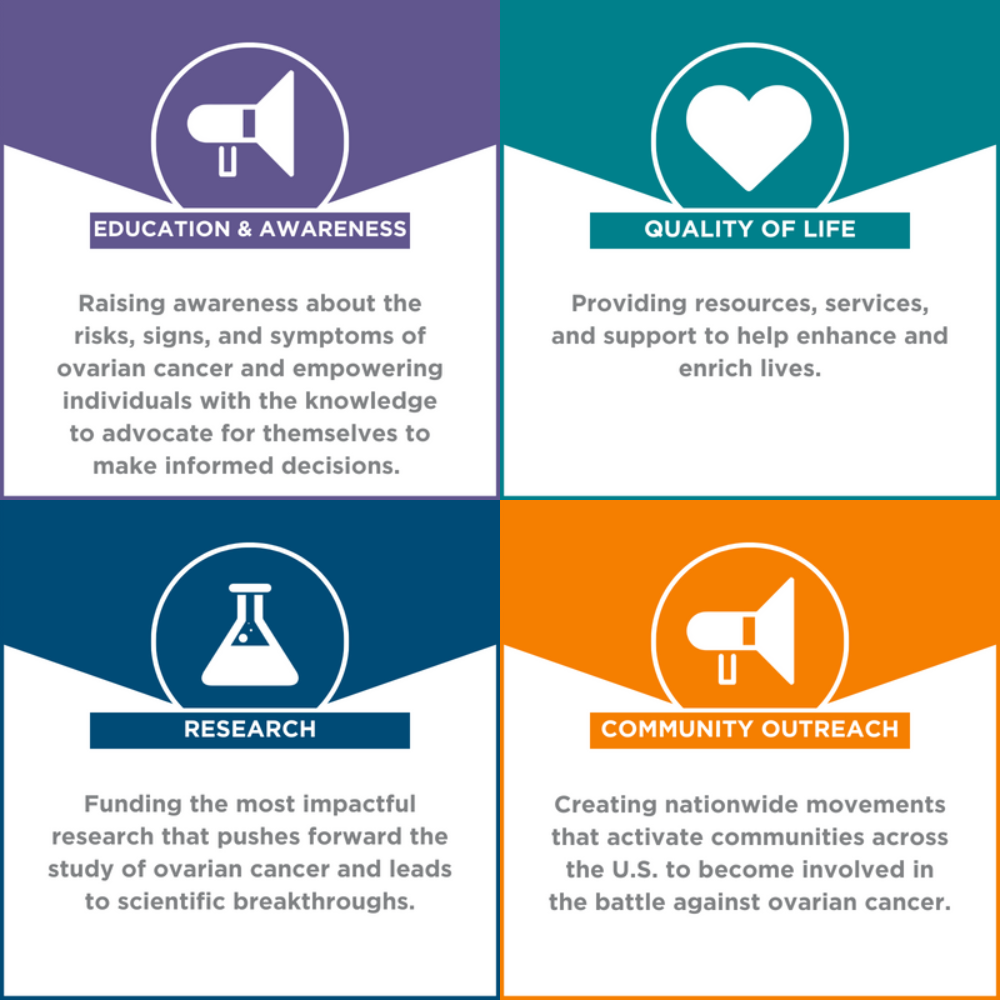
We are dedicated to curing ovarian cancer while improving treatments by advancing innovative science, promoting preventive measures, and advocating for, educating, and supporting anyone affected by gynecologic cancers to ensure the best possible care and outcomes.
OCRA is the leader in fighting ovarian cancer: convening experts and stakeholders to facilitate progress; advocating for more federal funding while awarding grants to fill the gaps; and supporting ovarian cancer patients and their families, as well as any type of gynecologic cancer patient.
OCRA invests more funds into ovarian cancer research than any other public charity.
Ovarian Cancer Research Alliance’s (OCRA) leadership in raising awareness about opportunistic salpingectomy—a simple procedure that can significantly reduce the risk of ovarian cancer—is at the center of a new Fortune article.
The story features a personal perspective from journalist and breast cancer survivor Beth Greenfield, who first learned about the procedure through her reporting on OCRA’s work; along with expert insights from Audra Moran, OCRA’s President and CEO, and Dr. Gillian Hanley, a member of OCRA’s Scientific Advisory Committee.
OCRA Expands Access to Steps Counseling Program
OCRA has partnered with Iris by OncoHealth to expand the reach of our Steps one-on-one counseling program, making licensed oncology social work counseling available in all 50 states at no cost for individuals diagnosed with a gynecologic cancer. Steps offers 10 free counseling sessions over a 6-month timeframe. Counseling is provided by Oncology Social Workers through OCRA Steps Counselors or Iris, depending on availability in the state where a program participant resides.
OCRA’s International Gynecologic Cancer Conference is the largest online event dedicated to education, support, and connection for those impacted by ovarian, endometrial, cervical, and other gynecologic cancers. Held September 15–17, 2025, this free online conference brings the experts to you, wherever you are.
Learn about a wide range of topics, including:
- Updates on ovarian, endometrial, cervical, and rare gynecologic cancers
- Hereditary cancer
- Novel treatment approaches
- Managing recurrence
- Sexual health and intimacy
- Plus community connection opportunities, and more.
You’ll hear from leading clinicians and researchers, learn from others with lived experience, and have the chance to ask questions and revisit sessions on your own schedule.
Whether you’re newly diagnosed, in treatment, off treatment, or supporting someone with gynecologic cancer, we invite you to join us.
• Ask the Experts and Managing Recurrence
• Sessions on Nutrition, Sexual Health, Cancer Health Disparities, and Hereditary Cancer
- Dr. Karen Lu, President of the Society of Gynecologic Oncology, will present Gynecologic Cancer 2025: SGO Goals of Care. Learn how cancer care is moving forward, and how there is hope in new treatment advances.
- Precision Medicine, Imprecise Access: Disparities in Hereditary Cancer Testing: Dr. Tuya Pal, Vanderbilt University Medical Center
- A Tumor‑agnostic Approach to Gynecologic Cancer Care: Dr. Alison Schram, Memorial Sloan Kettering Cancer Center
- • Advances in Endometrial Cancer: Dr. Bhavana Pothuri, NYU Langone Health
- • Resilience Through Life Challenges and Changes: Dr. Rab Razzak, Sutter Health
• Updates on ovarian, endometrial, cervical, and rare gynecologic cancers
• Information on novel treatment approaches
• Community connection opportunities each evening
Whether you are newly diagnosed, in treatment, off treatment, or supporting someone with gynecologic cancer, we invite you to join us.
Register for free today.
OCRA’s International Gynecologic Cancer Conference is the largest and most trusted conference devoted to the ovarian and gynecologic cancer community. It is the epicenter for researchers, clinicians, survivors, and friends to come together and learn from one another about developments in diagnosis, treatment, and quality of life for women with ovarian or gynecologic cancer.
Through your sponsorship, you play a key role in alerting women to the risk factors of ovarian cancer, helping researchers learn how better to screen and treat the disease, and giving power to ovarian cancer survivors’ voices. Together, we can work to bring awareness to ovarian cancer, increase the number of survivors in this country, and ultimately save more lives.
- Become a sponsor of OCRA’s International Gynecologic Cancer Conference
- Get your brand in front of survivors, decision-makers, healthcare providers, researchers, clinicians, and corporate supporters.
- Show your commitment to women and give power to the voice of cancer survivors.
- Strengthen your brand by educating women about risk, symptoms, and prevention, and highlighting your support of Ovarian Cancer Research Alliance.
- Drive new customers and supporters to your company and Ovarian Cancer Research Alliance through strategic marketing, branding, and partnerships.
- Increase brand recognition with our supporters.
- Raise funds to save more lives.
View Sponsorship Opportunities
Questions about Sponsorship?
Please contact Jessica Hughson-Andrade, OCRA’s Senior Director, Strategic Alliances, at [email protected].
For more information or questions about OCRA’s International Gynecologic Cancer Conference, please email us at [email protected].
For more information about sponsoring, please contact Jessica Hughson-Andradeat [email protected].
For press inquiries, please contact Amanita Duga-Carroll, ADC Strategic Communications, Inc., at [email protected] or (917) 597-7880.
On behalf of the millions of Americans living with cancer and at risk for being diagnosed, as well as health care providers, researchers, advocates, and their communities, we express our profound disappointment and grave concern regarding the proposed elimination of the Centers for Disease Control and Prevention’s Division of Cancer Prevention and Control (DCPC) in the President’s FY2026 discretionary funding request.
Cancer remains one of our nation’s most significant public health challenges, with nearly two million Americans diagnosed annually and over 600,000 lives lost each year. The United States already faces one of the highest age-standardized cancer incidence rates globally. The proposed elimination of the DCPC as part of the National Center for Chronic Diseases Prevention and Health Promotion would severely undermine our national capacity to address this critical chronic disease burden at a time when we should be strengthening, not dismantling, our cancer prevention infrastructure.
Read the full letter
signed by Ovarian Cancer Research Alliance
and other leading cancer organizations.
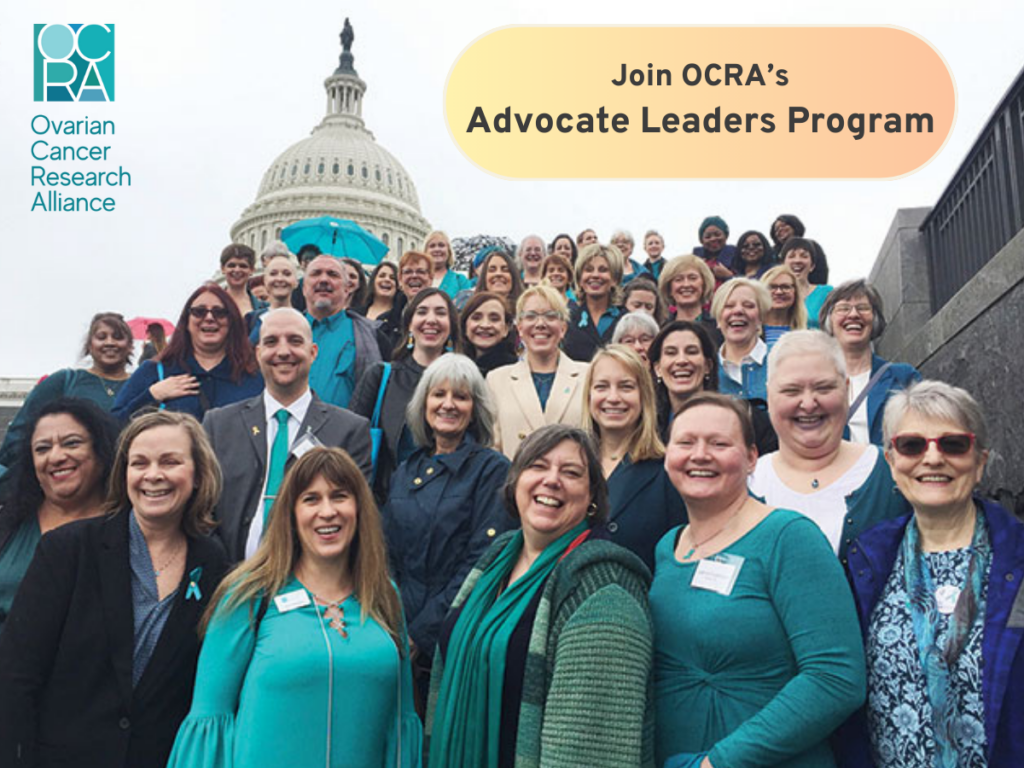
OCRA is inviting passionate individuals — patients, survivors, caregivers, and supporters .
No prior advocacy experience is needed, just a commitment to standing up for the ovarian and gynecologic cancer community.
As an Advocate Leader, you will receive training and support to connect with policymakers at the federal and state levels. Your efforts will focus on increasing funding for research and education; prioritizing drug and diagnostic safety; and improving access to treatment and care. You will also have the opportunity to serve on focused committees to help drive progress in areas that are important to you.
Learn more about OCRA’s Advocate Leaders Program and apply today.

EXPANDED EDUCATIONAL PROGRAMMING
OCRA has expanded its educational programming with new opportunities for connection and learning.
New offerings include monthly 90-minute Roundtables focused on coping strategies and shared experiences after diagnosis; weekly Workshops designed to share foundational knowledge about diagnosis, genetic and biomarker testing, treatment, and clinical trials; and interactive Staying Current sessions that provide important updates on research and treatment advances.
Learn more and register.
PATIENT POWER HIGHLIGHTS FINDINGS FROM OCRA CO-AUTHORED PAPER
A new article from Patient Power highlights new findings from a paper co-authored by OCRA and Komodo Health, and speaks with OCRA’s Vice President of Policy, Chad Ramsey, about why too many ovarian cancer patients are missing out on critical genetic testing.
Read the article.
Ovarian Cancer Research Alliance
Joins with The Clearity Foundation,
Strengthening Support
for the Ovarian Cancer Community
NEW YORK, NY
September 24, 2024
Ovarian Cancer Research Alliance (OCRA), the world’s largest ovarian cancer nonprofit, is proud to announce that The Clearity Foundation will combine with OCRA, effective January 1, 2025.
This important development brings together two of the most respected organizations in the ovarian cancer field, combining OCRA’s leading research, advocacy, and patient support programs with Clearity’s focus on scientific education and support for women and families facing an ovarian cancer diagnosis.
With this integration, the collective strength of both organizations will enable OCRA to offer enhanced and expanded services to the ovarian cancer and gynecologic cancer community as a whole.
OCRA has long admired the exceptional work
Clearity has done
to support the ovarian cancer community,
said Audra Moran,
President and CEO of OCRA.
We are proud to welcome Clearity
into the OCRA family.
By bringing the important work
of Clearity’s programs
under the OCRA umbrella,
we are creating a stronger,
more comprehensive
education and support system
that will allow us
to serve the ovarian
and gynecologic cancer community
even more effectively.
Since 2008, Clearity has been a trusted partner in the ovarian cancer community, providing professional, science-based education, one-on-one ovarian cancer counseling and customized clinical trial resources.
Clearity’s mission to improve survival and quality of life for women aligns seamlessly with OCRA’s dedication to supporting patients, advancing cutting-edge research, and advocating for policies that promote prevention and better care.
The combination of OCRA’s prominence in the ovarian cancer community and expansive resources along with Clearity’s focused expertise will result in a stronger platform to address the diverse needs of women with ovarian cancer and their caregivers.
Over the last 16 years,
Clearity’s team has been dedicated
to helping people impacted
by ovarian cancer access
the future of precision medicine
and whole person support.
Joining forces with OCRA
will help achieve Clearity’s aspiration
of supporting the thousands of people
who need emotional
and science-based support,
personalized for their unique needs,
said Hillary Theakston,
Executive Director
of Clearity Foundation.
Together we will ensure
that more patients and families
can navigate an ovarian cancer diagnosis
on their own terms,
empowered with the best science
to guide their way.
Clearity Founder, scientist and ovarian cancer survivor Laura Shawver, Ph.D., will join the OCRA Board of Directors.
Specific details regarding the combined programs and integrated service offerings will be communicated in the coming months, with the shared goal of ensuring that the ovarian cancer community benefits from an even stronger and more comprehensive support system.
Ovarian Cancer Research Alliance
debuts its latest innovation
in supporting ovarian cancer patients:
an online “Find a Doctor” tool.
Navigating a cancer diagnosis can be overwhelming. Finding the right medical team is paramount to ensuring the best possible outcomes, yet finding the right doctor can sometimes prove challenging.
OCRA is streamlining this process to increase patient options with its new Find a Doctor tool, which provides easy access to a network of local specialists and high-volume treatment centers.
Available on OCRA’s website, the free resource can connect patients and families with healthcare professionals specializing in ovarian and all gynecologic cancers across the United States.
Access to quality care
is a critical issue for patients,
said Audra Moran,
President and CEO of OCRA.
The launch of our Find a Doctor tool
represents a significant milestone
in our mission
to improve patient outcomes
and ensure access to the best possible care
for everyone affected
by ovarian and other gynecologic cancers
regardless of geography.
Read the full press release announcing OCRA’s Find a Doctor tool.
OCRA Harnessing Artificial Intelligence
to Develop Blood Test
to Detect Ovarian Cancer
In a news segment for NBC 4 New York, Dr. Daniel Heller, an OCRA grantee, discussed the exciting OCRA-funded study being undertaken in partnership with Microsoft AI for Health.
We are really excited
about the power of AI
because there has been so much success
in other disease areas,
and because we have this great partnership
with Microsoft,
says Audra Moran, OCRA’s President & CEO.
We think there is so much potential.
A New Direction in Preventing Ovarian Cancer
We can’t yet cure ovarian cancer, but there are strategies to potentially prevent it. With no early detection test — and important research demonstrating that in most cases, detecting ovarian cancer even 18-24 months earlier, well before symptoms begin, does not improve mortality — we must focus on strategies that DO work and can effect real change and save lives.
- 20% of ovarian cancers are caused by a genetic mutation — it is imperative to know risk, as well as prophylactic options for those with a mutation.
- 70% of the most common and lethal ovarian cancer begins in the fallopian tubes. Research shows that removing the fallopian tubes when having another pelvic surgery such as a hysterectomy or tubal ligation, and leaving the ovaries intact, can help prevent ovarian cancer.
The Society of Gynecologic Oncology (SGO) has endorsed this messaging — read our consensus statement.
Understand Your Risk
Many factors can increase or decrease the risk of developing ovarian cancer. Having a family history of breast, ovarian, uterine, or colorectal cancer increases your risk, as does having an inherited genetic mutation.
Pregnancy, breastfeeding, and the use of oral contraceptives, on the other hand, have been shown to decrease risk.
Learn more about the causes and risk factors of ovarian cancer and find out how you can help spread the word to your community about ways to lower the risk of getting the disease.
Get Genetic Testing
Studies show nearly 20% of ovarian cancer patients have an inherited genetic mutation that was likely the cause of their disease.
This is one of the highest percentages of inherited mutations among any cancer.
The BRCA 1 and 2 mutations are the most common, but there are other genetic mutations as well.
Genetic testing is extremely important because if you have an inherited mutation that increases your risk for ovarian or another gynecologic cancer, there are several things you can do to lower it.
And for those who have already been diagnosed with ovarian cancer, NCCN (National Comprehensive Cancer Network) guidelines recommend both germline (inherited) and somatic (acquired) testing because having certain gene mutations may impact the type of treatment you receive.
Note: If you have had genetic testing prior to 2013, you may need to be tested again.
Apply for a Free Genetic Test Kit
Answer a few questions to see if you are eligible for a free genetic testing kit.
If you didn’t qualify for our program but have a history of ovarian, breast, uterine/endometrial, and/or colorectal cancers in your extended family on either side, have a relative with a genetic mutation, or are of Ashkenazi Jewish ancestry, talk to your doctor about genetic testing.
Even if you are just concerned about possible mutations, have a conversation with your doctor.
Prevention:
Until we find a cure, prevention is our greatest weapon.
Early in 2023, OCRA spearheaded the promotion of new recommendations in the fight against ovarian cancer. Turning decades of conventional wisdom on its head, OCRA acknowledged what the science has shown — current methods of early detection and symptom awareness do not save lives — and began recommending a new path for prevention.
In a dramatic shift of focus, OCRA began a nationwide push for genetic testing of those at increased risk and consideration of a prophylactic surgery if having another related surgery even for those at average risk, to potentially prevent the deadly disease.
Advocacy and Education: the lifeblood of change.
On the Hill:
OCRA has built an army of dedicated advocates who stand united in support of the cause.
OCRA tirelessly urges Congress to prioritize the fight against ovarian cancer and is the only ovarian cancer-dedicated voice on Capitol Hill continuously advocating for hundreds of millions of dollars in federal research funding and for related health policies that benefit patients and survivors.
In the Classroom:
Education forms the bedrock of progress.
OCRA’s groundbreaking program Survivors Teaching Students® transcends the boundaries of traditional education. Dedicated volunteers share their personal stories and shed light on the realities of ovarian cancer in the classrooms of rising healthcare professionals. By equipping these future doctors and nurses with firsthand knowledge, OCRA empowers them to make a difference in the lives of countless women.
Support:
In times of adversity, support becomes a beacon of hope.
OCRA’s compassionate Patient Support oncology social work team is available to anyone touched by ovarian cancer, and any other gynecologic cancer, offering a comprehensive array of programs, including a wide range and type of virtual support groups.
And OCRA’s transformative Woman to Woman peer-matching is available in 30+ hospitals nationally as well as virtually for anyone, anywhere that needs support.
Understanding the power of companionship and the solace found in shared experiences, OCRA’s support services offer comfort, guidance, and healing to all those in need.
Gynecologic cancer patients, survivors, friends and family are invited to join us for our virtual support programs facilitated by our Patient Support team.
Staying Connected launched in the early isolated days of the pandemic in order to provide those diagnosed with a gynecologic cancer with a place to meet others, feel supported, and gain a sense of community.
An initial weekly Zoom meeting facilitated by an Oncology Social Worker evolved into a comprehensive nationwide program of weekly and monthly online gatherings, offering invaluable connection and support.
Registration is required.
Advancing research, promoting prevention, advocating for change, educating healthcare professionals, and providing unwavering support — making a difference in the fight against ovarian cancer for all those affected.
We are pleased to share a new set of resources for the ovarian and gynecologic cancer community: 25 informational videos, all delivered by experts in the field and originally presented at our 2023 National Conference.
Led by top gynecologic oncologists and experts, this collection of over 25 videos offers practical insights and information for living well with ovarian and all gynecologic cancers:
• What’s New in Ovarian & Gynecologic Cancers, presented by the president of the Society of Gynecologic Oncology (SGO)
• New Treatments for Endometrial & Uterine Cancer
• Advances in Cervical Cancer
• Caregiver Journey: Balancing Family, Work & Cancer
• Managing Recurrence
• PTSD After Cancer
• Sexual Health After Cancer
• Chemo Brain
… and many more
Alongside the most recent updates on research, treatment, and care, you will discover valuable insights and supportive tips for navigating daily life with gynecologic cancer.
Video topics include thriving post-diagnosis, managing symptoms, talking with family about cancer, coping with financial challenges, maintaining a healthy diet, spirituality, and much more.
In our popular Ask the Experts sessions, Drs. Karen McLean, Anil Sood, and Premal Thaker address key topics, including:
• The role of biomarkers in treatment planning
• Typical durations of PARP inhibitor therapy
• Strategies to manage chemotherapy-induced neuropathy
• The usage of vaginal estrogen cream
• Considerations for hormone replacement therapy
Gain valuable insights, explore practical tools for thriving, and feel free to share with others who could benefit from this resource.
PO Box 32141
New York, NY 10087-2141
212-268-1002
ocrahope.org
Ovarian Cancer Patient Charity Project
We are a non-profit charity group, donating 100% of proceeds to gynecological and breast cancer patients for bills, utilities, rent, car payments, treatment, past and previous doctor bills, surgery, medications and chemotherapy/radiation, and more.
If you are a patient who needs financial assistance, fill out our online application, or send to the address or fax on the contact page. We will try our hardest to assist every request for financial help. You can use the funds for ANYTHING that is burdening you financially. All we want is the patient in need to be as stress-free as possible while receiving treatment of a potentially deadly disease.
Ovations for the Cure
Ovations recognizes that ovarian cancer patients may need a little extra help and guidance while battling this disease. One of the ways we can assist patients in need is by providing a healthy, well-balanced diet. And now, thanks to tremendous support from our generous sponsors, we can provide patients in the Massachusetts area with meals — free of charge. These meals are not only healthy, but they are delicious too!
Ovations Introduces Partnership
with Savor Health
… at no charge to our community!
Ina®’s personalized clinically and contextually appropriate nutrition and symptom management interventions 24/7 “on demand” via SMS text help cancer patients stay on treatment, prevent and manage side effects, and feel strong throughout the cancer journey.
Personalized Nutrition Guidance 24/7
at Your Fingertips “On Demand”
Whenever you would like answers to your nutrition questions or on how to prevent or manage symptoms, text Ina® from your cell phone and she will respond with personalized nutrition tips, recipes and answers to your questions — no phone calls or appointments necessary.
All of Ina®’s knowledge and advice is based on scientific evidence and the training of oncology-credentialed registered dietitians, nurses, and doctors who are experts in the needs of cancer patients.
Ovations Highlights Our Partnership
with Connect and Thrive (C.A.T.)
We are proud to highlight Connect & Thrive, Inc. (CAT), a valued sponsor of our 2nd Annual Spring Fling: Dancing Through the Decades held on May 3rd.
CAT is a heart-centered social impact company that helps cancer previvors, patients, thrivers, and caregivers access trusted integrative care through a carefully curated online Marketplace of evidence-based services and healthy living products not typically covered by insurance.
Founded by environmental engineer Christine Anastos following her own breast cancer diagnosis, CAT was created to bridge the gap between conventional medicine and holistic healing.
At the core of CAT is a unique crowd=funding model called KittyFund™, which allows friends and family to contribute directly to a patient’s healing. These funds must be used in CAT’s Marketplace, and 100% of every donation goes to the patient.
Starting a KittyFund™ is a meaningful and empowering way to give or receive support. Whether for yourself or someone you care about, it offers loved ones a way to help that is tangible and deeply appreciated.
To learn more or start a KittyFund™, please click the link below where you can also access CAT’s FREE RESOURCES GUIDE FOR PATIENTS!
When people offer help, let them.
It creates space for healing, hope, and connection.
Click Here to Learn More About CAT
Click Here for the FREE Resources Guide
Ovations for the Cure, Inc. provides critical funding for new and ongoing ovarian cancer research initiatives that focus on early detection, prevention, developing more effective treatments for ovarian cancer, and to bring about a cure ovarian cancer in our lifetime.
We have had the opportunity to direct over $1.7 million to ovarian cancer research initiatives and treatment programs.
Your continued support for these initiatives translates into hope for the estimated 1 in 79 women who will develop ovarian cancer in her lifetime.
Ovations for the Cure is here to give everyone a fighting chance — we want to save lives.
We are a non-profit organization totally committed to the relentless pursuit of a cure for ovarian cancer by raising funds, awareness, and support to increase our many programs and endowments that go to further our goal of finding a cure.
The number one way Ovations can promote ovarian cancer awareness is through its online presence — through this website and the use of Social Media.
Why? Because the Internet makes it easy to not only touch local and national audiences but to also reach people from all over the world — people looking to learn more about ovarian cancer, the research we are funding and the programs we are supporting.
Since the launch of ovationsforthecure.org in 2006, the site has had over 2.7 million visitors from countries worldwide, including the U.S., the U.K., Canada, Australia, Ireland, and New Zealand.
Ovations for the Cure offers programs which provide support and relief to patients with ovarian cancer. Our patient programs are created to give knowledge, hope, comfort and support to those women currently diagnosed and living with ovarian cancer.
Ovations is proud to provide programs such as The Butterfly Bangle, which provides a charm-style bracelet to express the journey ovarian cancer patients and survivors have gone through.
We also offer free healthy meals through our Helping Hands program. Even from the beginning, we have thought it necessary to create patient programs that help to build disease awareness, bolster patient morale and inspire cause for hope.
ACCEPTS VIRTUAL CLIENTS
Susan Patterson, Executive Director
[email protected]
617 237 0129
800 Boylston Street
PO Box 990168
Boston, Massachusetts 02199
SHARE
SHARE is a national nonprofit that supports, educates, and empowers women affected by breast, ovarian, or metastatic breast cancer, with a special focus on medically underserved communities.
Our mission is to connect these women with the unique support of survivors and peers, creating a community where no one has to face breast or ovarian cancer alone.
SHARE’s mission is to create and sustain a supportive network and community of women affected by breast and ovarian cancers.
SHARE brings these women and their families and friends together with others who have experienced breast or ovarian cancer and provides participants with the opportunity to receive and exchange information, support, strength and hope.
Services include hotlines in English and Spanish with capacity in 12 other languages, support groups, wellness programs, educational meetings, and advocacy activities.
Hillary Theakston, Clearity’s Executive Director, announced the exciting news that Clearity is joining the Ovarian Cancer Research Alliance (OCRA), effective January 1, 2025.
Since then, people have reached out in support and to say “Congratulations!”
A strategic imperative for Clearity has been to reach more women and to provide our support throughout their ovarian cancer journey. Clearity and OCRA have a shared aspiration to revolutionize ovarian cancer and I am completely confident that together, we will ensure that more patients and families can navigate an ovarian cancer diagnosis on their own terms, empowered with the best science to guide their way.
I started Clearity 16 years ago because of my personal experience. When I was diagnosed with ovarian cancer, despite being a cancer researcher and knowing about scientific advancements, I still had difficulty getting the information that I felt was important to identify the most effective treatment options.
When women with ovarian cancer and their families talk about how overwhelming and frustrating it can be to find the resources they need, I truly understand what they mean.
It is fortunate that science has advanced since then and that we have more testing and treatments available than ever before.
We have greater ability to match treatments with genomic alterations; PARP inhibitors and antibody drug conjugates (ADCs) are just the beginning of these promising treatments options we hoped for 16 years ago.
However, those advancements are available today because women enrolled in clinical trials that led to their approval by the FDA. Because we now better understand the biology of ovarian cancer, we have more clinical trial options available that could lead to improved future treatments and, yes, even more cures than we have today.
We can all make a difference by helping patients and their physicians access the most up-to-date information to make the very best treatment decisions, including the option to enroll in a clinical trial.
That is why Clearity coming together with OCRA is so critical and the timing is so right. By combining with OCRA, we become a stronger, more accessible resource to people when every day matters.
Thank you for supporting Clearity in the past and I hope I can count on you to continue your support well into our exciting and promising future.
With heartfelt gratitude,
If nothing is done to change the status quo right now, by 2050, 8 million women will be lost to ovarian cancer.
In this same time frame, overall incidence of the disease will rise by 55% and mortality will jump by close to 70%.
We need a shared global commitment today to fight this disease.
Click here to learn the “5 Facts Everyone Should Know About Ovarian Cancer”.
To achieve this, we …
Share the latest information on treatment options
Help women access the most useful and comprehensive tests to better understand the molecular profile of their cancer
Guide women to clinical trials where appropriate
Offer professional emotional support and educational resources to women and caregivers
Provide an online community with information and social support.
All of Clearity’s services are provided free of charge. We believe all patients should have access to the most advanced care, personalized for them, regardless of their ability to pay.
Clearity’s Friends and Founders events are a unique opportunity for our supporters to hear directly from our ovarian cancer experts, including a live Q&A.
“Why Do I Feel Like This?”
This focuses on the emotional impacts of a cancer diagnosis, exploring how a person diagnosed with cancer may face seemingly opposite emotions, such as feeling hopeful yet fearful or surrounded by family yet lonely.
Clearity’s experts, Susan Hess, Director of Education and KrisAnn Talarico, Director of OC Counseling, share things to keep in mind when emotions don’t make sense and ways to support the person diagnosed and their loved ones.
“The Scientific Landscape of Current and Promising Ovarian Cancer Treatment”
This is your opportunity to hear the latest from Anne Mette Buhl, PhD, our Director of Science & Clinical Trials and Dr. Ramez Eskander, our Chief Scientific and Medical Advisor. Dr. Eskander shares the very latest after recently attending the ASCO Annual Meeting!
You will also hear about Clearity’s ambitious future plans from our Executive Director, Hillary Theakston.
We invite you to settle in and read, watch and/or listen to the latest information about the ovarian cancer experience.
Psychosocial Support: Steps Through OC
Clearity believes that all women and active caregivers deserve compassionate and professional emotional support while managing an ovarian cancer diagnosis.
To this end, Clearity offers the Steps Through OC program for ovarian cancer psychosocial support.
This personalized one-to-one assistance helps individuals manage the stress and coping associated with their diagnosis. The program offers ten sessions of professional support over the course of six months to both patients/survivors and active caregivers as well as educational content, resources,and referrals.
Our OC Counselor team does not provide psychotherapy services. Instead, our team provides professional ovarian cancer-focused support around the emotional experience of the diagnosis. Each OC Counselor has a master’s degree in mental health and offers expert compassionate listening skills, education in coping methods and useful, personalized resources.
The Steps Through OC team is here with comprehensive support to help you, your caregivers and family live a full life while managing ovarian cancer. Wherever you are in your OC experience, we respect your unique situation and the aspects of life you care about most. Through a series of ten individual phone calls or videoconferences, our professional OC Counselors are ready to help understand who you are, how you feel, your concerns, and provide ways to manage your ovarian cancer experience with coping tools, education and resources.
Our primary goals are to enhance your self-advocacy, ease your emotional and physical symptoms/side-effects, increase your confidence in treatment decisions, enhance your coping and resilience skills, reduce your stress level, and work toward a personal goal that is important to you in this process.
Our recent independent program evaluation showed high participant satisfaction along with statistically significant evidence of: 1) improvement in overall quality of life, 2) improvement in emotional well-being, 3) improvement in functional well-being, 4) perceived stress reductions, and 5) improvements in coping.
We give hope to women with ovarian cancer and their families.
Treatment Decision Support
Every year, more than 22,000 women are diagnosed with ovarian cancer. Unfortunately, survival improvements are decades behind other cancers.
Clearity is working to change that. Clearity believes that all women deserve the best possible therapies for their unique disease. To achieve this, we …
–Announce the latest treatment options available at new diagnosis, at maintenance, and at recurrence or disease progression
–Explain how tumor testing can reveal the cancer’s molecular profile and suggest possible treatment strategies
–Help identify clinical trials that best suit each woman’s specific situation
If you would like personal one-to-one assistance, our Treatment Decision Support scientific team can help you. Clearity does not provide medical advice about which treatments women should receive. Instead, our staff explains treatment options and tumor testing results and provide potential questions and other information that they can discuss with their physicians.
We aim to help you understand …
–Standard chemotherapy and targeted treatments appropriate for your particular clinical situation
–How your tumor’s characteristics (biomarkers, profile, gene mutations/alterations) can make it more sensitive to certain therapies
–Promising drugs in clinical trials that may be appropriate for you
Clearity takes a comprehensive hands-on approach to help a women identify the treatments that may work best against her unique disease. Assessing her medical history as well as tumor molecular profiles and other diagnostics, Clearity professionals help each woman and her physicians chart the most advantageous course of treatment. When a treatment decision needs to be made, Clearity provides information about the standard options for each patient’s clinical situation, as well as access to genomic information about her cancer to help inform her decision-making.
Advancing Care
Since 2008, Clearity has profiled tumors for hundreds of women.
The Clearity database records the results from each woman’s Tumor Blueprint, along with information about the therapies they received and how well they worked.
Matching molecular profiles with outcomes provide additional evidence to help guide treatment decisions.
Clearity has created a separate data repository that stores privacy-protected clinical and tumor profiling data. As this database grows, it supports research studies and helps
Clearity provide more up-to-date information about the therapies being considered by the women and physicians who come to Clearity for support and scientific guidance.
The Blueprint is generated by measuring specific protein biomarkers and genetic variations in a patient’s cancer and linking those findings to potential treatments. The online interactive Tumor Blueprint Report provides results from each patient’s molecular profile, including drugs that match. This profile can help prioritize treatment options already being considered by the clinical team and may also suggest options they have not yet considered, including off-label medicines or drugs being tested in clinical trials. Clearity experts review this information with patients, answer their questions about the results and help them find clinical trials when appropriate. Clearity also offers assistance for women who do not want to get their tumor profiled or have already obtained a tumor profile and want help understanding it. As with those receiving Tumor Blueprints, Clearity can discuss standard of care options and identify appropriate trials.
Clearity does not provide medical advice about which treatments they should receive. Instead, our staff explains Tumor Blueprint results and provides potential questions, and other information that patients can discuss with their physicians.
Someone Who Listens
Clearity exists to help women find credible information about their ovarian cancer and the treatments that can help them survive. We are scientists, but we also know that cancer’s impact goes way beyond a clinical diagnosis. Our goal is to understand each patient’s unique priorities and needs. That means long, purposeful discussions informed by both science and compassion.
clearityfoundation.org/psychosocial-support
www.stepsthrough.org
[email protected]
1.866.830.5134
Turning-the-Tide Ovarian Cancer Retreats
The mission of Turning The Tide Ovarian Cancer Retreats, Inc. is to build a community that empowers women living in New England who have been diagnosed with ovarian cancer to live fully, primarily through an annual retreat.
This is not your ordinary camp either! No camp beds or spidery-webbed shower stalls: each women shares a room with one other woman, complete with private bath. Think “hotel room” quality. The back door faces the lake so the views are just wonderful.
Each morning, there were gifts outside our door, gifts like a string knapsack with a warm blanket – perfect for those who want to go to the meditation class. On the day I arrived, I was greeted by a whole group of women who carried my bag and other items down to my room. When I entered the great room, there was a beautiful fire going and a smell of lavender in the air. Each of us was given a hot lavender foot soak and foot massage … ahhhhh. Hot drinks were available and the women who had been there before sat beside us and immediately engaged us in conversation. Everyone was warm and friendly.
We sat down to gourmet meals for breakfast, lunch and dinner. Table clothes, cloth napkins, and candles adorned the tables. Conversation flowed.
Activities included zip lining, archery, kayaking, making fairy gardens, cooking, and many other arts and craft classes. In addition, we were treated to Therapeutic Touch sessions, deep meditation sessions using music and other instruments. Every woman was treated to a massage. There was so much to see and do that the days flew by.
The best thing however, was getting to know these wonderful women who have gone through the same journey as you. It was a time for us to relax and most importantly, rejuvenate.
When the notice goes out that camp registration is happening, be sure to jump on it because the spots fill quickly. Hope to see you there!
Unite for HER (UFH) Wellness Program
The Unite for HER (UFH) Wellness Program is available to those diagnosed with breast or ovarian cancer in the last 18 months, as well as for those living with metastatic breast cancer or recurrent ovarian cancer, renewing services for life.
All patients in the Wellness Program receive a HER care box containing educational resources, healthy products, and a passport valid for one year and $2,000 of integrative therapies, including professional counseling, nutritional counseling, meal delivery services, virtual fitness and yoga classes, sexual health counseling, and meditation.
ACCEPTS VIRTUAL CLIENTS
127 East Chestnut Street
West Chester, Pennsylvania 19380
484 459 9982
[email protected]
www.uniteforher.org
Leave a Reply