The mission of Moving Through Cancer is to assure that all people living with and beyond cancer are assessed, advised, referred to, and engaged in appropriate exercise and rehabilitation programming as a standard of care.
The initiative was started as a presidential task force of ACSM president Kathryn Schmitz, Ph.D., M.P.H., FACSM. More recently, an international team of experts came together to form a strategic plan toward the goal of realizing the mission. Focus areas include development of a workforce, programming, and triage pathways and logistics for referral; additional research and evaluation of programming; policy, awareness, marketing, and funding for sustainability.
Finally, the PATIENT with cancer is the center of all of these efforts. It is the vision of the Moving Through Cancer initiative that everyone living with and beyond cancer is aware of the benefits of physical activity and exercise and is enabled to choose to become and stay active at a level appropriate for them.
Moving Through Cancer has developed a searchable directory to help health care providers, exercise professionals and patients find appropriately trained professionals and programs in their communities
According to the American College of Sports Medicine (ACSM), the American Cancer Society(ACS), the US Department of Health and Human Services (USDHHS), and the American Institute for Cancer Research (AICR), exercise has been shown to reduce the risk of cancer incidence for multiple common cancers as shown in this ACSM Infographic:

So… How do we get moving to prevent cancer? ACSM’s Exercise Is Medicine initiative has tips!
- Sit Less. Move More: English Version Spanish Version
- Being Active for a Better Life: English Version Spanish Version
- Being Active with Your Young Child: English Version Spanish Version
- Being Active as a Teen: English Version Spanish Version
- Being Active as We Get Older: English Version Spanish Version
- Staying Active When Frail: English Version Spanish Version
The American Institute for Cancer Research also offers tips for getting active to reduce cancer risk.
The US Department of Health and Human Resources has also produced materials to help Americans to “Move Your Way,” as well as a Move Your Way video and specific materials to help all adults get active.
American Cancer Society Links also offers links relevant to Exercise and Cancer Prevention:
- Eat Healthy and Get Active
- ACS Guideline for Diet and Physical Activity for Cancer Prevention
- INFOGRAPHIC: Diet and Activity Guidelines to Reduce Cancer Risk
- Tips for Staying Active
What if you’ve already had a diagnosis of cancer?
Exercise Is Medicine for all people living with and beyond cancer according to the American College of Sports Medicine, the American Cancer Society, the American Physical Therapy Association, and the American Society of Clinical Oncology.
Benefits during treatment include improved:
- Fatigue
- Quality of life
- Physical function
- Body composition
- Anxiety
- Depression
- Sleep
- Breast Cancer Related Lymphedema
These benefits continue post treatment and, for three cancer types (breast, colon, and prostate), there is evidence for reduction of cancer recurrence and mortality.
Tips from these organizations:
The American College of Sports Medicine’s Moving Through Cancer initiative offers an educational booklet that is also available in Spanish, as well as a program directory to find exercise programs appropriate for survivors near you.
American Physical Therapy Association also offer resources to get active after a cancer diagnosis.
The American Cancer Society also offers guidance for Physical Activity and the Person With Cancer.
Further, there is an exercise app that has been developed to specifically help people living with and beyond cancer: cancerexerciseapp.com.
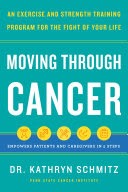
Dr. Schmitz’ professional mission is for all people living with and beyond cancer to be connected to appropriate exercise training from diagnosis through survivorship. The website and the accompanying book are dedicated to that mission and the patients and survivors served by this mission.
Cancer diagnosis and treatment do not have to be a passive experience, and it shouldn’t be. Dr. Kathryn Schmitz’s Moving Through Cancer introduces a 21-day program of strength training and exercise for cancer prevention and recovery.
Go from diagnosis to thriving with this empowering guide to using strength training and exercise to improve your mental and physical health before, during, and after cancer diagnosis and treatment.
This groundbreaking program will show you how to use exercise and movement to:
• Recover more quickly from surgery
• Withstand chemotherapy (or other drug treatments) or radiation with fewer side effects
• Bounce back to daily life following cancer treatments
• Prevent loss of function or fitness due to treatment
• Return to work more quickly or stay at work throughout treatment
• Protect against late side effects of treatment that come years after diagnosis
Leading exercise oncology researcher Dr. Kathryn Schmitz shows you how to prepare for cancer treatment and begin regularly exercising in just 21 days using five key steps: Move, Lift, Eat, Sleep, and Log. Both informative and practical, Moving Through Cancer explains the science of healing and prevention and delivers a paradigm-shifting message for patients, doctors, and caregivers about using exercise to live with and beyond cancer.
Dr. Kathryn Schmitz is a practitioner and an academic and a caregiver. In 2010, the publication of one of her trials in The New England Journal of Medicine and the Journal of the American Medical Association overturned years of entrenched dogma and conventional wisdom that told breast cancer survivors to avoid upper body exercise. In 2016, Dr. Schmitz’s wife, Sara, was diagnosed with stage 3 squamous cell carcinoma — she is currently NED (no evidence of disease) and cancer free. Moving Through Cancer is inspired by Dr. Schmitz’s professional and personal experience with cancer.
Dr. Schmitz’s empowering message will not only resonate with anyone who has been diagnosed with cancer but with their family and loved ones as well. Dr. Schmitz is able to give life back to readers by providing results that include better sleep, better sex, less chemo brain, reduced nausea, and improved recovery.
Moving Through Cancer is the center of Dr. Schmitz’s campaign to have doctors prescribing exercise to cancer patients as common practice by 2029.
Until now, exercise-for-cancer books have been limited to academic approaches or one-cancer-specific (breast) or one-exercise specific (yoga, pilates) books. Moving Through Cancer is for all cancer patients and survivors and their caregivers.
Leave a Reply