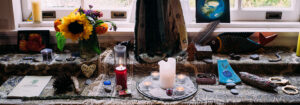
The Commonweal Cancer Help Program (CCHP) is a week-long retreat for people with cancer. Our goal is to help participants live better and, where possible, longer lives. CCHP addresses the unmet needs of people with cancer. These include finding balanced information on choices in healing, mainstream, and complementary therapies, exploring emotional and spiritual dimensions of cancer, discovering that illness can sometimes lead to a richer and fuller life, and experiencing genuine community with others facing a cancer diagnosis.
We often refer to the Cancer Help Program as the beating heart of Commonweal. Since the program started in 1986, thousands of alumni have felt the transformation in their heads, hands, and hearts. Our participants gain knowledge about integrative medicine strategies and experience how to hold the transformation that a cancer diagnosis may generate.
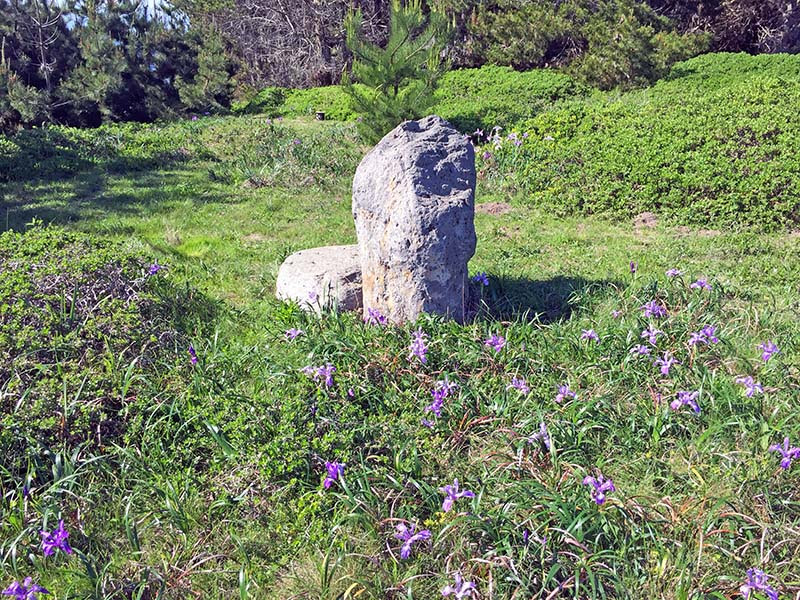
The Cancer Help Program is very much the beating heart of Commonweal. When the staff and participants are on the land, the place transforms. You can sense something is happening. Entering the main building, a calmness and hush emanates from the library where people lay in deep relaxation after a morning of Tai Chi or Yoga. All week, people wander between the Pacific House, the Sandtray Room, the acupuncture table, a walk with Michael Lerner, or a talk with Jenepher Stowell.
As I write, eight people are at Pacific House right now experiencing the Commonweal Cancer Help Program’s retreat. More than 1,600 people have been through this week-long retreat at Commonweal across 38 years — not to reveal a magic cure, but to begin a healing journey.
The work is deeply informed by extensive research that backs integrative medicine, research that clearly details the profound benefits of embracing nutrition, exercise, stress reduction, and contemplative practice along with western medicine’s efforts to treat people with cancer.
At the same time, what happens in the Cancer Help Program circle holds mystery. I have learned to trust the circle, especially as hundreds of people around the world experience transformation in similar healing circles.
The staff of the Cancer Help Program, directed by Arlene Allsman, hold these circles six weeks a year, and three more weekends with another group, Bay Area Young Survivors. Those of us here at Commonweal while the cancer retreats are in progress can tap into the mystery of the place, and experience the deep humility of spending time with people who are looking toward the edge of life and who are asking deep questions. The mystery and humility in the face of the unknown ripple through the Commonweal community, in Bolinas and around the globe.
Just as an individual faces cancer, our communities now face a global crisis. Over the years, our experiences in healing have helped us to understand the world of personal resilience — and to expand our focus on resilience to both community and global exploration. Each morning, when I walk into Pacific House during a Cancer Help Program retreat, I am grateful for where this all started: the founders of our healing work and the hundreds of alumni who carry the spirit of this work. As our world faces increasing challenges, our talented program directors and staff continue their commitment to finding healing and resilience.
With gratitude,
Oren Slozberg
Commonweal Executive Director
CCHP offers an integrated program of healing that includes daily group support sessions led by a psychotherapist, massage, yoga, meditation, deep relaxation, imagery work, symbolic learning through sand tray, poetry, exploration of sacred space, and a gourmet, primarily vegetarian diet. Evening sessions, led by Commonweal co-founder Michael Lerner, explore choices in healing, mainstream therapies, integrative therapies, pain and suffering, and death and dying.
Widely considered the premier program of its kind in the United States, CCHP draws participants from across the United States, Canada, and Europe.
After offering more than 200 retreats over three decades, we have learned that the program often has beneficial effects on anxiety, fear, loneliness, helplessness, and other similar states that can accompany cancer. Many participants come to CCHP with questions about next steps in treatment or in living with a serious cancer diagnosis.
Healing the Spirit and Soul of Cancer Patients
by Michael Lerner, Commonweal President
May 31, 2024
See the full text of Michael Lerner’s publication:
Choices in Healing:
Integrating The Best of Conventional and Complementary Approaches to Cancer
Listen to one of the Cancer Help Program-related conversations held by The New School at Commonweal— a conversation between Commonweal Founder Michael Lerner and Psychotherapist Francis Weller, both staff at the CCHP.
The Commonweal Way: Letter from Michael Lerner
An amazing conversation in the Commonweal library between U.S. Surgeon General Dr. Vivek Murthy and Dr. Rachel Naomi Remen — the writer, physician, mentor and co-founder of the Commonweal Cancer Help Program.
The conversation between Dr. Murthy and Dr. Remen focused particularly on the pandemic of loneliness, which has been a central issue for the Surgeon General’s office. His website has collected research, testimonies, and recommendations to guide new ways to address the issue. The recordings of the conversation are available on his U.S. Department of Health and Human Services channels, and on The New School at Commonweal’s website and media channels (YouTube and Soundcloud, as well as Apple Podcasts, Spotify, and Amazon Music).
In some ways, what was happening at Commonweal a few weeks before the conversation — our Power of Hope youth camp — was part of the antidote. The young people who attend the summer camp often say that this is the only place where they can be truly seen, and where they can be themselves. That same sentiment is shared by the hundreds of people who have been to a Healing Circle. From alumni of the Cancer Help Program, we hear that Commonweal is their home and their community. We hear this from the women who attend the Octavia Fund retreats for Black women, from the Fall Gathering community, from the Art of Vitality program in the Commonweal Garden that Natura Institute for Ecology and Medicine runs, and from our Retreat Center Collaborative gatherings and community meetings.
In most of our programs, we witness these stories of connectedness. It might be that most of what we do at Commonweal is about connecting. Just the act of gathering in nature, in a courageous and safe space, does half of the work. And yet this sense of community, connection, and belonging reverberates beyond the physical limitations of the Commonweal land. The community formed through decades of gatherings on our land, the sacred hospitality of Retreat Center, and the grief-saturated stones in the Chapel, are invoked each time a Commonweal community gathers, anywhere in the world.
What is the difference between curing and healing?
This is a question that comes up often in our work at Commonweal. Curing is what we see doctors for — to deploy the world of medicine to eliminate an illness. Healing, as we say at Commonweal, is a movement toward wholeness and well being. We can be cured without being healed, and we can experience healing without being cured.
Healing — of ourselves and our planet — is the core of Commonweal’s calling. This calling was first answered by Michael Lerner and Rachel Naomi Remen when they started the Commonweal Cancer Help Program, which will shortly be running its 222nd retreat. Commonweal’s healing mission spilled out beyond the Cancer Help Program into healing circles, climate change work, youth in the juvenile system, and refugees at the border. Our healing work includes amplifying young voices from the global south and their experience of the poly-crisis, responding to the needs of people who are alone and experiencing eco-grief, building community resilience in the face of natural disasters, and a variety of other important work that emanates from Commonweal’s perch on the Pacific.
All of it is the work of healing.
Health & Healing
www.commonweal.org
P.O Box 316
Bolinas, California 94924
415 868-0970
Contact Us
Leave a Reply