Black people have higher mortality rates than white people across most diseases.
Black people have the highest death rate for cancer overall.
Black people are more likely than white people to be diagnosed with female breast, lung, and colorectal cancers at a late stage.
Black men are more than twice as likely to die from prostate cancer than other men.
Black women have the lowest 5-year relative breast cancer survival rate compared to all other racial/ethnic groups for every stage of diagnosis and every breast cancer subtype.
Black men have the highest rates of developing and dying from lung cancer.
Black women are more likely to die from cervical cancer than white women.
Black Americans are disproportionately affected by colorectal cancer, with higher rates of both diagnosis and death compared to white Americans.
Why is Black Breast Cancer Different?
-
African American women have a 31% breast cancer mortality rate – the highest of any U.S. racial or ethnic group. (Breast Cancer Prevention Partners)
-
Black women with breast cancer have a 71% higher risk of death than white women. (JAMA Oncology 1/21)
-
Black women are 42% more likely to die of breast cancer. (Breast Cancer Prevention Partners)
-
Black women account for 12.5% of all new breast cancer cases and 15.5% of all breast cancer deaths. (ACS)
-
Black women under 35 get breast cancer at two times the rate of white women and die at three times the rate. The 5-year survival is 81% for black women vs 91% for white women. (ACS)
-
92% of black women agree that breast health is important, 25% of women have recently discussed it and 17% have taken steps to understand their risk. (Ad Council)
-
The odds of advanced (stage 3/4) disease versus stage 1 disease among black women are almost four times those of white women (NIH)
-
Black breast cancer survivors have a 39% higher risk of breast cancer recurrence. (Phase 3 TAILORxTrial)
-
The odds of advanced (stage 3/4) disease versus stage 1 disease among black women were almost four times those of white women. (NIH)
-
Black women have a 2.3 times higher odds of being diagnosed with triple negative breast cancer.
-
Women under age 40 have twice the odds of being diagnosed with triple-negative breast cancer than women aged 50-64 years. Among women who were diagnosed with breast cancer, those diagnosed at late stages were 69% more likely to have triple-negative cancer than other types.
(Lia Scott, Lee Mobley, Tzy-Mey Kuo, and Dora Il. CANCER)
-
8% of black breast cancer is metastatic, 60% higher than white breast cancer.
-
33% of black breast cancer is regional (stage 3), 27% higher than white breast cancer.
-
56% of black breast cancer is localized, 15% lower than white breast cancer.
-
The 5-year survival rate for distant black breast cancer is 28% lower than white breast cancer.
-
The 5-year survival rate for regional black breast cancer is 9% lower than white breast cancer.
-
The 5-year survival rate for localized black breast cancer is 4% lower than white breast cancer.
-
Black men are 50% more likely to get breast cancer.
-
Men with black breast cancer are 66% more likely to die.
-
77.3% of African-American moms are single moms. 70.5% of all African American working mothers are single moms, making them the primary, if not sole, economic providers for their families. (Economic Policy Institute)
-
Black women are just as likely to have hereditary breast cancer mutations as white women, yet their participation in genetic counseling and testing is substantially lower. Research shows that black women are highly interested in undergoing testing for BRCA mutations once they are presented with information regarding its benefits. (NIH)
-
Nearly 14% of black women are uninsured versus 8% of white women.
33% of black women receive insurance through public programs. (US Census Bureau)
-
Women who are uninsured or on Medicaid are nearly twice as likely to have a stage 3 diagnosis than women who are insured (some who are insured are more likely to be diagnosed at stage 1 or 2. (National Center for Biotechnology Information)
-
Not only is breast cancer more biologically aggressive in African American women, the disparity in breast cancer mortality also reflects social barriers that disproportionately affect black women via poverty, cultural, and social injustice barriers across all disease phases: prevention, detection/incidence, treatment, post-treatment/quality of life, survival/recurrence/mortality. (NIH)
-
The physiology of black women has not been a consideration in clinical trial research.
-
Since 2016, the FDA has approved four novel drugs for breast cancer. However, none of those clinical trials had more than 3% black participants.
-
A 2014 study indicated that black women experience emotional suppression and behavioral disengagement — “experienced increased levels of distress and poorer survival.” Black women lack the space to talk about how their concerns went unheard by a medical profession that skews white and male. Black women fear sharing their diagnosis within their families and communities because they are often the family breadwinner. (Pew and Bidstrup et al. Acta Oncologica)
-
Some studies have shown that women with extremely dense breasts have a four to six times greater risk of developing breast cancer than women with mostly fatty breasts. Black women had statistically significantly higher (21.1%) absolute breast area density (40.1cm) than white women (33.1cm). Black women also had statistically significantly (44.9%) higher volumetric density (263.1cm) than white women (181.6cm 3). (JNCI)
-
Triple negative breast cancer is associated with worse prognosis, early relapse after standard chemotherapy, a high frequency of metastasis to lung, liver, and brain and a low overall survival compared to other breast cancer subtypes. (NCBI)
-
The poorest TNBC survival was observed in black women with only 14% 5-year relative survival. This is versus 91% for local and 65% for regional overall (www.ncbi.nlm.nih.gov/pmc/articles/PMC6316530/)
-
12.4% of black women under age 50 with breast cancer have BRCA. (Cancer. doi: 10.1002/cncr.29645
-
Racial disparities in BRCA1 and BRCA2 genetic testing persist despite clinical availability of testing for mutations over the past 20 years. While rates of genetic testing among women diagnosed with breast cancer appear to be increasing, black women affected with breast cancer are substantially less likely to undergo BRCA1/2 genetic testing compared to white women with the disease.
-
Black women have a higher incidence of early‐age onset breast cancer before age 50 (33% vs. 21.9%), are twice as likely to be diagnosed with triple‐negative breast cancer (TNBC) (22 vs.11%), an aggressive form of breast cancer that has been associated with a BRCA1 gene mutation, and have a 42% higher mortality rate from breast cancer compared to white women.
-
As recent studies have documented a high prevalence of BRCA and other high penetrance gene mutations among black women with breast cancer, there is a critical need to increase uptake of genetic testing among black women to improve personalized cancer care and to reduce cancer risk.(https://www.ncbi.nlm.nih.gov/pmc/articles/PMC5504315/)
-
In women younger than 40-45 years old, the population-based incidence rates of breast cancer are higher for black women compared to white women. About 30% of all newly diagnosed black breast cancer patients are younger than 50 years old, compared to only 20% of white patients. (https://www.healthline.com/health/breast-cancer/black-women-and-breast-cancer)
-
21% of African American women with breast cancer survive 5 years past their diagnosis, compared to only 8% of Caucasian women, said lead author Andrea Barsevick, Ph.D., R.N., Professor of Medical Oncology at Thomas Jefferson University.
-
In an analysis of racial disparity data from a large international treatment study, researchers found that a combination of genetics and taxane-based chemotherapy Taxol and Taxotere doubled the risk for neuropathy for Black women.
-
A study in the Journal of the National Cancer Institute showed that black women were more likely than white women to have difficulty affording and taking endocrine therapy, a 10-year treatment prescribed for women with certain types of breast cancer.
-
Black women more commonly reported not taking the medication as prescribed — skipping doses or taking breaks from the medication. Almost 14% of black women did not take the medicine everyday, while about 5% of white women reported non-adherence. The reasons for this are complex, researchers say, and more research may be required to tease them out. They note that black women were more likely to report that paying for the medication was a financial burden, although the study showed that even affluent black women were less likely to stick to the treatment than white women were. They also more commonly found the side-effects bothersome, since the endocrine therapy can cause symptoms of menopause, like hot flashes and joint pain.
-
Black patients may have better outcomes when they see black doctors. Only about 4% of physicians are black. (Kcur.org)
-
The University of North Carolina researchers surveyed data from the Carolina Breast Cancer Study, the largest population-based study of breast cancer in North Carolina, which was launched in 1993. They followed the financial status of 1,265 white women and 1,229 black women over the course of their cancer diagnosis and treatment and found black women have more cost-related barriers to treatment: 24% of black women compared to just 11% of white women delay or refuse recommended treatment due to cost, and 14% of black women compared to 6% of white women lose their jobs due to breast cancer.
-
About 23% of black women diagnosed with breast cancer in 2004-2013 had either no health insurance or had Medicaid coverage, versus 8% of white breast cancer patients, Dr. Ahmedin Jemal of the American Cancer Society in Atlanta and colleagues report in the Journal of Clinical Oncology. That insurance difference explained about 37% of the excess mortality among black women, the researchers calculated. The next most important factor was actual differences in the tumors, which accounted for 23% of the mortality disparity.
-
From 2019 to 2045, a decrease of 4% is expected in the white non-Hispanic (WNH) population while the black population is projected to increase 24%. In the same time period, the projected number of breast cancer incident cases for women of all ages decreased by 1% in WNH while the black cases are projected to increase 72%.
(Journal of Clinical Oncology) -
The Carolina Breast Cancer Study identified that black women experience a higher frequency of delayed treatment and prolonged treatment duration … 32% of younger black women were in the highest quartile of treatment duration versus 22% of younger white women.
(ACS Journals: https://doi.org/10.1002/cncr.33121) -
National Cancer Institute predicts the number of people who will die from breast or colorectal cancer in the U.S. will increase by nearly 10,000 over the next decade because of COVID-19’s impact on oncology care.
The COVID-19 pandemic is causing delayed diagnosis and sub-optimal care for people with cancer.
Cancers being missed now will still come to light eventually, but at a later stage and with worse prognoses. -
The 5-year African American survivor rate is 78% vs Caucasian rate of 90%. (MBCN)
-
Black women are diagnosed with de novo metastatic breast cancer at a 58% higher rate than white women. (NCBI: https://www.ncbi.nlm.nih.gov/pmc/articles/PMC5911612/)
2for2Boobs
2for2 Boobs, Inc. is a 501(c)(3) Breast Cancer Awareness-2-Action and African American Survivorship Advocacy non-profit.
2for2Boobs is an acronym – a call to action – to take 2 minutes 2 check your 2 breasts monthly.
We are dedicated towards providing culturally-relevant breast cancer education, information, and resources to increase knowledge about breast health and the importance of knowing your risks, preventive measures, and your family cancer genetic history. We also implement engaging survivorship outreach programs that empower, support, and connect women/men who have had a breast cancer diagnosis by helping them advocate by giving voice to their powerful breast cancer journey.
Our mission is to help to save African American/Black lives from breast cancer by educating, engaging, and empowering women, men, and teens about early detection, know their risks, preventive factors, address barriers and disparities to allow for managing their health pro-actively for better outcomes.
The organization was founded by a 3x breast cancer survivor-to-thriver who was able to detect her cancer early by conducting self-breast exams due to her family genetic breast cancer history.
African American Breast Cancer Alliance (AABCA)
- Survivor-founded support network.
- Provides culturally-specific emotional and educational resources.
AABCA is dedicated to building and sharing awareness, connections, education, resources and support for African American/Black women, men, families and communities affected by breast cancer. They offer a virtual support group via Zoom and an annual retreat for female survivors.
Our Mission
The AABCATM is dedicated to providing hope, awareness, education, emotional and social support to breast cancer survivors, their family members, and the community
Vision
Create a network of Black women, men, families, and communities affected by breast cancer that feels connected, informed, and supported.
Our History
The African American Breast Cancer Alliance (AABCATM) was established in October 1990. Its founding members created a non-profit with a goal to talk about cancer, create culturally-specific, easily understood breast cancer brochures, and provide an environment where Black women could connect, share, and support each other through their journey of survival.
This dynamic group of women understood that Black women lacked awareness about breast cancer and taking swift action due to fear that leads to later diagnosis. Historically, Black communities encounter economic, educational, racial, and social barriers that affect their health. Finding culturally-specific support and resources about breast cancer for Black women was difficult. The available medical information did not address the treatment side-effects they were experiencing. Cultural disparities and healthcare bias too often contribute to the higher breast cancer mortality rates seen in African American women.
Our Commitment
From its inception, AABCA has been committed to sharing crucial, life-affirming information, and promoting the benefits of early detection and treatment. We provide emotional and social support for breast cancer patients and survivors to help them have better recovery experiences as they cope with having this disease.
“Being there” has always been our motto and, as our outreach efforts continue to grow, we have expanded into “Share, Support, Survive.”
What We Do
Since 1990, the African American Breast Cancer Alliance (AABCA) has opened the door for Black women, families, men and communities to discuss cancer, “The Big C”. AABCA developed culturally-specific educational and promotional materials to promote breast health awareness, patient support and advocacy.
Because of the high mortality rates of Black women dying from breast cancer, the founders of AABCA made its mission to provide education, a forum to discuss barriers, concerns, lack of information, myths, patient navigation, resources, survivorship and treatment related to breast cancer and its impact on the individual, loved ones, and our communities.
Working with state and national cancer information organizations, AABCA developed strategies to address the needs of people of color and underserved communities affected by cancer.
While its special focus is on the Black/African American community because of the documented increase in mortality and incident rates, AABCA forms coalitions with other organizations to work on sharing information about breast cancer in communities of color to help create better outcomes and increase survivorship.
Our services are available for you by phone, online, in print, and in person. AABCA is here for you, caregivers, co-survivors, family, friends, and community. You are not alone. We want to be there for you, so that you can continue to be there for yourself and your loved ones.
Whether you are a patient, survivor, a caregiver, co-survivor, family member or friend, we all need a little help when dealing with cancer and other stressful life changes. We may experience anger, fear, frustration, a sense of helplessness, feel so alone, and yet, feel we can’t open up to others to share our feelings.
A support person or group can provide emotional and social support that helps people cope with the struggle of cancer. However, we may feel shy or skeptical, “I don’t feel comfortable talking in groups.”, “I’m doing fine. I don’t need support.”, “How can I get to a support group when I’m so busy taking care of my loved one?”
AABCA recommends that you reach out and get connected for yourself, your children, family, and friends. Find a support group or therapist that works for you. AABCA offers an online support group to share feelings confidentially, make friends, get help navigating the health care system, and learn from others who have walked a similar path. A little help, listening, sharing, and understanding goes a long way some time.
ACCEPTS VIRTUAL CLIENTS
P.O. Box 8981
Minneapolis, Minnesota 55408
612 462 6813
African American Health Program in Maryland
Offers health and nutrition education, counseling, and support services that can help prevent cancer. Provides referrals for cancer screenings relevant to men, such as prostate exams.
African American Male Wellness Agency (AAMWA)
Focuses on reducing health disparities among Black men.
Offers health screenings, cancer awareness events, and wellness walks in cities across the U.S.
African Women’s Cancer Awareness Association
AWCAA was established in 2004 by a coalition of African immigrant women health professionals in order to address disparities in awareness, prevention, and access to healthcare for African immigrant and descent communities that face cancer and other life-threatening illnesses.
The group has grown to encompass healthcare professionals, entrepreneurs, and concerned individuals dedicated to eliminating these disparities within the Washington metropolitan area, the continent of Africa, and beyond.
BEXA Equity Alliance
The Bexa Equity Alliance believes that every woman deserves access to life-saving care. As Bexa’s non-profit arm, the BEA advances their shared commitment to Leave No Woman Behind. Together with their growing tribe of Allies, Partners, and supporters, they provide accurate, convenient, painless, and radiation-free Bexa Breast Exams at no cost to women of color and underserved women in communities across the world.
Black Health Matters
A wide range of health information and advocacy with cancer-specific resources, particularly geared toward racial health disparities.
Black Men’s Cancer Action Council (BMCAC)
Part of the American Cancer Society’s work to reduce cancer disparities.
Advocacy, awareness campaigns, community education, early detection programs.
Black Women’s Health Imperative
National non-profit focused on Black women’s overall health and cancer prevention.
Offers tools for lifestyle change and cancer risk reduction.
The Black Women’s Health Imperative is developing a national workplace equity and anti-racism initiative to improve the health and wellness of Black women, particularly their experiences in the workplace. There is a need for national standards that are elevated through awareness, accountability, partnership, and evidence-based resources.
We target the most pressing health issues that affect Black women and girls in the U.S. through investments in evidence-based strategies, bold programs, and advocacy outreach on health policies.
A leading voice on Black women’s health issues, including breast cancer. They provide advocacy, research, and resources.
Cancer Black Care (CBC)
Addresses the cultural and emotional needs of Black people affected by cancer, as well as their families, friends, and caregivers.
CancerCare
Offers counseling and resource navigation by oncology social workers to help Black men cope with cancer and overcome barriers to care. They also have relevant workshops and publications.
Provides free emotional and practical support, including counseling, resource navigation, support groups, educational workshops, and financial assistance information for Black or African American people with cancer. CancerCare has culturally competent counselors and programs tailored to Black communities.
Cancer Support Community of Ann Arbor African American Fellowship
Connects African Americans in the community dealing with cancer. Friends and family members are welcome to their monthly meetings.
Chemo Divas Foundation
Aims to bring resources and visibility to women of color facing cancer. They offer a support network, a resource page with financial and educational support, and the Chemo Divas Grant for patients in need.
Cierra Sisters, Inc.
Cierra Sisters, Inc., is an African-American breast cancer survivor and support organization.
Emory University Hospital Midtown’s African Americans with Cancer Support Group:
A virtual support group that meets monthly.
Endometrial Cancer Action Network for African-Americans (ECANA)
Hosts an online support group for Black women diagnosed with endometrial cancer and provides educational materials and survivor stories.
FORCE (Facing Our Risk of Cancer Empowered)
Offers hereditary cancer support groups, educational materials, and Women of Color-specific programs.
Helps women understand and manage BRCA-related risks.
Malecare
A support and advocacy organization focusing on the needs of male cancer survivors. We are known for our men’s health programs for underserved populations, such as Gay men (www.lgbtcancer.org), African-American men, and Native American male cancer survivors.
Their “Black Dad Connection” program focuses on health, parenting skills, education, support, and resource sharing for men with various cancers. They offer in-person and online support groups.
We have provided true psychosocial support to over 38,000 men since our founding in 2004. We are a volunteer organization of social workers and psychologists, who found the more widely-used model of a monthly lecture as inadequate for facilitating peer to peer support. Our groups meet weekly or bi-weekly, are 90 minutes in length, and led by a social worker or psychologist who is diagnosed with prostate cancer, or has suffered the loss of their father from prostate cancer. Attendees are limited to men diagnosed with prostate cancer.
We run both massive and intimate online groups, including video chats.
We also facilitate a leading Male Breast Cancer support network.
More than Just Words
Black women with breast cancer are approximately 40% more likely to die compared to white women with breast cancer in the U.S. – and are also more likely to be diagnosed at a later stage with more aggressive disease.
During 2020, breast cancer became the most commonly diagnosed cancer worldwide while, at the same time, breast cancer screenings overall have decreased drastically. With COVID-19 and breast cancer disproportionately impacting women of color and drops in screenings threatening timely diagnoses and cancer care, it is more urgent than ever to address the disparities in breast cancer for Black women.
Novartis collaborates with leading multi-disciplinary experts to raise awareness and create solutions that drive health equity across the continuum of breast cancer care and urge women to get the screening or care they need as soon as possible. Novartis will identify the most pressing issues facing Black women with breast cancer and collaborate to build solutions.
Our commitment to reimagining medicine at Novartis goes beyond developing therapeutics to helping close historical gaps in treatment and care of underserved communities. Knowing that Black women have a higher incidence of or are at a greater risk for certain diseases, like breast cancer, we must work with other organizations to move forward together to successfully address health equity and access issues. We are at a critical juncture where we can change the course of diagnosis and care for all women.
… Marion Brooks, Vice President and US Country Head, Diversity and Inclusion, Novartis
Unfortunately, Black women already experience later detection and delayed diagnoses, resulting in fewer care options and harder-to-treat disease for our patients. It is critical to act now to broaden awareness and change these statistics, because they represent more than just data: they are our mothers, daughters, sisters, partners and spouses, our friends.
… Monique Gary, DO, MSc, FACS, Medical Director of the Grand View Health Cancer Program and More Than Just Words Advisor
Personally and professionally, I commit to addressing the systemic and racial biases Black women with breast cancer face every day. I am frustrated by our current reality, but remain hopeful that together we can identify and support measurable change through this initiative.
… Jamil Rivers, Founder and CEO, The Chrysalis Initiative, Board President, METAvivor Research and Support, Inc., metastatic breast cancer patient and More Than Just Words Advisor
There is a great need to address the devastating reality that Black women often do not receive the same quality of breast cancer care as other women. On the heels of the COVID-19 pandemic and the spotlight on inequities being experienced by communities of color in the United States, we are calling for a collective commitment to demand better for the Black breast cancer community. Convening experts to amplify the issues regarding Black breast cancer and devise a plan of action – as Novartis has – is instrumental to addressing the systemic issues that lead to health disparities.
… Ricki Fairley, Co-Founder and CEO of TOUCH, The Black Breast Cancer Alliance and More Than Just Words Advisor
Novartis is committed to creating solutions and funding programs to improve breast cancer care for Black women. Learn how you can help close this serious gap and connect to resources by visiting www.MoreThanJustWords.US.
My Sister My Friend Breast Cancer Support
It was formed in 2004 by four breast cancer survivors as the Long Beach affiliate chapter of Sister Network Inc, a national African American Breast Cancer Survivorship Organization. Later in 2006, it became My Sister My Friend Breast Cancer Support.
The organization provides a host of supportive services to women battling breast cancer, their caregivers, and families. The organization also provides breast health educational outreach and screening navigation to lay and vulnerable populations.
Oshun Charitable Organization (OCO)
The Oshun Charitable Organization (OCO) provides information about ovarian cancer to Black women. The OCO’s awareness campaigns partner with women in their communities to provide lifesaving critical health information. While knowledge is power, we understand the systemic barriers faced within medical institutions. Our advocacy campaigns are rooted in pushing for more early detection testing of ovarian cancer.
Our Mission: To support the growth and health of Black women through education access and health awareness.
There is no lack of evidence that Black women face barriers in the American health care system. Black women are disproportionately affected by heart disease, high blood pressure, and maternal mortality.
The racial disparities present when a Black woman faces an ovarian cancer diagnosis are no different. One in 78 women will be diagnosed with ovarian cancer in her lifetime. There is no diagnostic test such as a Pap smear or a mammogram to detect this cancer in an annual screening. When detected at Stage 1, the five-year survival rate for ovarian cancer is 90%. However, if the cancer is detected at Stage 4, the five-year survival rate plummets to 17%. Black women are less likely to receive the appropriate diagnosis or hormone treatments they need for gynecological cancers, making them more likely to succumb to the cancer.
The goal of the Oshun Charitable Organization is to increase ovarian cancer awareness in the Black community. Our theory of change is rooted in education and advocacy. We believe that meeting women where they are – in their churches, community centers, or hair solons – to share critical health information could be life-saving.
We also understand that information about ovarian cancer is not enough. There needs to be a diagnostic test for the disease and a larger push within the medical community to identify the symptoms of a gynecological cancer. With your support, we can make late stage diagnoses of ovarian cancer a thing of the past.
SHARE Cancer Support – Women of Color Program
Peer-led programs and helplines for Black and Latina women with breast and ovarian cancer.
Free support groups and webinars.
While supporting all women with breast, ovarian, cervical, and uterine cancers, we offer specific programming for Black women, including virtual support groups for metastatic breast cancer and for women of African descent with ovarian or breast cancer.
Sister to Sister
Sister to Sister offers safe and welcoming support to African American/Black women with a support group that meets every other week, cancer education workshops, wellness programs, and community outreach.
African American/Black women are more likely to be diagnosed with cancer at a younger age and later stage. We also tend to have more aggressive forms of the disease.
We need Sister to Sister volunteers! Become a Community Health Advocate with Women’s Cancer Resource Center and help bring vital information about cancer detection and treatment into the communities where we live, work, and worship. Volunteers also provide emotional support to women experiencing cancer.
To join Sister to Sister, please call (510) 809-0212.
Located at the Women’s Cancer Resource Center in Berkeley, California
Sister to Sister International, Inc.
A non-profit, non-governmental organization that links women, girls, and families of African descent globally to the resources that connect, advance, and strengthen them. We do this through advocacy, education, and the promotion of African culture. Developing healthy lifestyles is a cornerstone of the organization.
Our primary areas of focus include Health and Wellness, Education and Global Affairs. To this end, we sponsor …
Health symposia and campaigns,
Personal and professional development workshops and seminars,
Fundraisers to enable charitable contributions and student scholarships,
Global briefings,
Communications and academic enrichment programs for youth,
Periodic Newsletters and a Newsflash to promote advocacy and information sharing,
Dialogue with legislators on key issues affecting women and families,
Support for UN conferences,
Network with women from all over the world,
Collaborate with partners to advance our causes.
Sisters Network Inc.
National African American breast cancer survivorship organization.
Promotes early detection and community-based outreach events
The largest national African American breast cancer survivorship organization. Provides education, support groups, financial assistance, advocacy, and national outreach initiatives like the “Gift for Life Block Walk.”
Sisters Network Inc. is committed to increasing local and national attention to the devastating impact that breast cancer has in the African American community. We offer the Breast Cancer Assistance Program (BCAP), a financial assistance program for, but not limited to, medical-related lodging, co-pay, office visits, and prosthesis. We offer access to mammograms, quality breast cancer care, resources, and information.
Sisters Working It Out
Our Mission … To serve as a catalytic force in the elimination of breast cancer disparities in the Chicago area. This is accomplished through programs that educate and empower women of color as well as connect them to quality preventive health services. SWIO provides compassionate care and support to women across the cancer continuum from outreach and screening through survivorship.
Our History … Dr. Monica Peek, an internal medicine physician at the University of Chicago, founded Sisters Working It Out, NFP in 2001 as a call to action to address the alarming breast cancer disparity rates across the city of Chicago.
Throughout its 17-year history, SWIO has worked tirelessly to address the many barriers contributing to high breast cancer mortality rates for African-American women, such as lack of health information, mistrust of providers and health systems, and limited access to breast cancer screening (e.g., mammograms, clinical breast exams) and primary care.
Susan G. Komen – Stand for H.E.R. (Health Equity Revolution)
Provides financial assistance, patient navigation, and community outreach to address Black breast cancer disparities.
The Basser Center for BRCA – Black & BRCA Initiative
Raises awareness of BRCA mutations in the Black community.
Offers genetic education, expert resources, and support networks.
The Center for African American Health
The Center works toward health equity for the underserved African American community by offering culturally-competent health education and outreach that empowers community members to overcome the root causes of health problems, maximize their own individual health, and access health and support services.
Mission
The Center for African American Health is committed to improving the health and well-being of the African American community by offering community-based, evidenced-based, disease prevention, and disease management programs, events, and services.
Vision
An African American community healthy in mind, body, and spirit, filled with individuals taking responsibility for their own health and contributing to the enrichment of the community.
Values
The rich legacy of the Black church in the African American experience inspires our work. We believe that the church continues to be the heartbeat within the African American community for citizen engagement, leadership development, and enabling self-sufficiency.
Geographic Focus
The targeted geographic area served is the greater metropolitan Denver area, which has a population of 3.1 million people. Approximately 5% of the region’s total population is African American. More than half of those African Americans live in the city and county of Denver (population 704,000), where African Americans account for 10% of the population.
The Chrysalis Initiative
Aims to eliminate racial disparities in breast cancer outcomes.
Offers BC Navi App for patient tracking and self-advocacy.
Founded by breast cancer survivor Jamil Rivers, this initiative helps Black women navigate disparities in cancer care. Offers coaching, navigation, and hospital accountability tools.
Black women are more likely to face mortality from breast cancer, despite its lower incidence rate compared to White women. In a systemically racist healthcare system, Black women are often dismissed and ignored, and are treated with prejudices that keep them from receiving an equitable standard of care.
For breast cancer, compared with non-Hispanic whites, the adjusted relative risk of death is 71% higher for non-Hispanic Blacks and 14% higher in Hispanics (JAMA Network).
Breast cancer disparities are a multi-layered and complex issue, a blend of multiple contributing factors including personal risk, inherited or genetic risk, social determinants of health, and healthcare delivery barriers. The Chrysalis Curriculum unpacks these complex issues at every level for both patients and providers.
Racial disparities are observed in luminal tumors and most pronounced among Black women of high socioeconomic status. Black women tend to be diagnosed younger and with more aggressive breast cancers than their White counterparts (CDC and NIH). Established in 2019, The Chrysalis Initiative exists to counteract breast cancer disparities and breast health inequities using patient activation, provider education, and barrier intervention to reduce the impact of disparities in breast cancer outcomes.
This needs to change … which is why The Chrysalis Initiative launched BC Navi to close this healthcare gap. This digital resource provides Black women (and other disparate groups) with the tools to recognize and address racism in their cancer care, including 1:1 coaching, accessing resources and a patient community, and viewing a patient-curated provider directory — all with the purpose of erasing the line of inequality in breast cancer care.
The Chrysalis Initiative exists to disrupt outcome disparities within breast cancer so every patient receives the care she deserves. By providing patients with mentoring and resource navigation and equipping Black women (and other disparate groups) with the opportunity and education to assess their breast cancer risk, we are closing the gap one story at a time.
In addition to supporting patients with breast cancer, The Chrysalis Cancer Curriculum Provider Training challenges institutional realities with evidence-based strategies to guide providers as they reshape their paradigms and improve their practices to eradicate treatment disparities. The Chrysalis Initiative applies evidence-based strategies to reshape the individual and institutional knowledge, attitudes, and behaviors that impact health outcomes for Black women (and other disparate groups) with breast cancer.
The Confess Project
Mental health advocacy for Black men and boys, including those impacted by chronic illness and cancer.
Barbershop mental health training, community healing initiatives.
The Pink Haus
The Pink Haus (TPH) is a 501(c)3 nonprofit organization supporting, empowering, and educating communities of color affected by Triple-Negative Breast Cancer (TNBC). We encourage daily prevention by implementing integrative, holistic health and wellness, to provide financial support to women currently in treatment for TNBC, and to empower women to advocate for their health.
We aim to provide emotional and financial support to women currently in active treatment for TNBC.
We aim to educate about survivorship and transitioning from survivor to thriver after treatment.
We aim to educate women about the latest research and data regarding triple-negative breast cancer, so they have informed and proactive conversations with their healthcare providers.
We aim to raise awareness in communities of color through outreach and education about staying on top of routine health care, including screenings and check-ups that reduce disease risk, to educate and provide information and resources about integrative, holistic health and wellness before, during, and after diagnosis.
Thelma D. Jones Breast Cancer Fund
 The Thelma D. Jones Breast Cancer Fund (TDJBCF) is a unique non-profit grassroots organization whose mission is to advocate and improve the overall health and wellness for women and men through outreach, education, and prevention. We promote early detection strategies for breast health and access to the best biomedical and evidence-based complementary therapies to reduce the incidences and mortality rates of breast cancer.
Our vision is to save lives and embrace and achieve a world community free of breast cancer. We realize this vision with our Guiding Principles ….
- Respect
- Collaboration
- Quality and Patient-Centered Care
- Culturally Sensitive Approach
- Evidence-Based Strategies

Thelma D. Jones
Founder
The Thelma D. Jones Breast Cancer Fund
People talk a lot about legacy.
For me, that means making sure that my life has purpose.
It was important for me
because a lot of patients I help look like me.
I wanted to help to create a different world
for other patients of color in the future,
particularly those that have been historically underserved.
– Thelma Jones
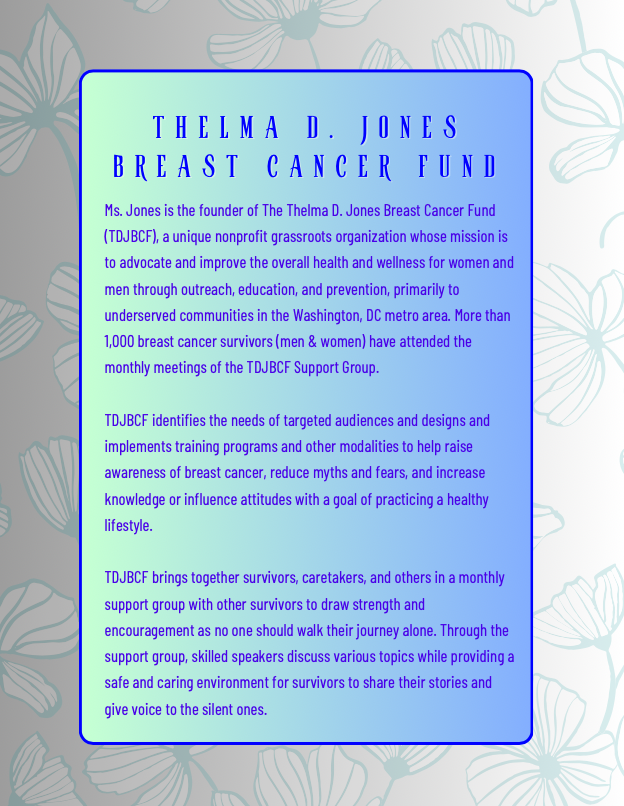
Outreach, Education, Non-clinical Navigation Services and Survivorship Support
Provide trained breast health speakers for events and media opportunities in and around the Washington, DC area.
Conduct breast health classes in a variety of venues with a focus on the historically underserved communities, such as public housing. Southwest DC has the largest concentration of public housing in the city.
Organize panel discussions on breast health, including identifying and recruiting panelists.
Host breast health presentations at workshops, conferences and seminars, including table presentations at health fairs, hospitals, schools, recreation centers, libraries, faith-based institutions, nonprofit organizations, public sector organizations, public housing events and malls.
Conduct special outreach for male breast cancer survivors and men’s health, including dedicating an entire support group meeting each February for this specific purpose.
Conduct outreach in Southwest DC for young girls and women in public housing through street organizing efforts at feeding programs and neighborhood outings, including giving mini talks and discussions or doing one-on-one conversations on prevention, education, complementary therapies, diagnosis, treatment and survivorship. Also serves as a regular speaker and table presenter during the annual Mayor Youth Leadership Health and Fitness Expo and the popular Summer in Lansburgh in Southwest DC which attracts over 1000 participants annually.
Arrange screening appointments, accompany patients to appointments, help patients to apply and receive medical coverage, counsel patients experiencing fear and emotional challenges and refer to appropriate social service organizations, when necessary.
Identify and make referrals for breast cancer survivors for various social service programs, including domestic violence, shelter programs and food service programs.
Provide emotional support, hospital and home visits to breast cancer survivors, including speaking at memorial services and funerals and providing follow-up support to the extent possible
Tigerlily Foundation for Young Breast Cancer Patients, Patient Advocacy, and Navigation
Focuses on health equity and advocacy for young women of color with breast cancer.
Offers education, patient navigation, and community engagement programs.
Tigerlily Foundation is a national breast cancer foundation providing education, awareness, advocacy and hands-on support to young women (15-45) before, during, and after breast cancer.
We envision a future where breast cancer diagnosis doesn’t inspire fear, but ignites hope for a future because:
- We can inspire young women diagnosed with breast cancer to transform inside and out as they journey through treatment to live their best life going forward.
- We empower young women to be advocates for change.
- Breast cancer will no longer be a terminal disease, but become a chronic disease that will someday be cured.
- We will end disparities – of age, stage and color, in our lifetime.
Through our programs, we seek to educate and empower women of all backgrounds, including those at heightened risk, those facing health disparities, and those with less access to care. We strive to improve the quality of life and end isolation among breast cancer survivors. Most importantly, we encourage and endeavor to empower fearless females in every stage of their journey, and to show them that they are not or alone, but are beautiful, strong like the tiger and the lily, and that they can be transformed – during and after breast cancer.
Supports young women of color (ages 15-45) affected by breast cancer at any stage. They offer various programs, including online educational videos, “Hope Boxes” for newly diagnosed patients, and initiatives to address healthcare disparities.
EDUCATION
Being diagnosed with breast cancer opens you up to a whole new world of jargon, experiences, and feelings. What gives you power as you begin your journey is understanding breast cancer and knowing your facts, so that you become an educated partner in your own treatment and recovery. Our goal is to offer you information that will help you better understand breast cancer, so that you are empowered and knowledgeable.
ADVOCACY
Although there is global awareness of breast cancer, people are not always aware that younger women can and do get breast cancer. There is a need for change in terms of ensuring better representation of issues facing younger women’s health in the community. Tigerlily Foundation works to advocate for that change.
EMPOWERMENT
Our focus is on reminding of you how beautiful and strong you are, throughout your breast cancer journey. Our hope is that by the time treatment is over, you will not only have new life, but be transformed into a “New You.” Through our Fearless Female Program, we can help you get there.
SUPPORT
Being a breast cancer ‘survivor’ is not just a name we attribute to those who have made it through this journey. It is a way of life. Being a survivor means that you are part of a sisterhood, and it means that as strong as you are, you will need help along the way. Tigerily’s support programs offer everything from peer support, hope bags, meals and financial assistance, to a way to connect with other young survivors in real time. We are here to help you through this journey. Just reach out your hand and someone will be here to hold it, and guide you along the way.
Touch, the Black Breast Cancer Alliance
 Connects patients, survivors, and healthcare providers.
Runs #WhenWeTriumph campaign and Black Data Matters initiative.
Focused on Black women with breast cancer, offering advocacy, community events, and initiatives to amplify Black voices in cancer research and care.
Our vision: To save more Black women.
Our vision: To humanize the Black woman and her experience with breast cancer.
We NEVER want to see a patient without basic needs. When possible, we provide financial resources to assist patients with basic needs. Please call for more information (916 307 2419).
Mission: Touch drives the collaborative efforts of patients, survivors, advocates, advocacy organizations, health care professionals, researchers, and pharmaceutical companies to work collectively and with accountability towards the common goal of eradicating Black Breast Cancer.
Unites patients, survivors, advocates, and healthcare companies to eradicate Black breast cancer. They have initiatives like “Breastie Love,” a support network, “#BlackDataMatters” to encourage participation in clinical trials, and “When We Trial” to advance research for Black women.
TOUCH Care is the first ever breast cancer advocacy-led program to provide a nurse navigator service to support Black breast cancer patients in clinical trials. Our pre-emptive TOUCH Care program includes supporting our clinical trial partners with the development of culturally-agile patient recruiting materials, training trial staff to effectively engage and support Black Breasties, and providing Breastie-led nurse navigation to support patients throughout trials.
TOUCH Care will address both the logistical and the emotional barriers to clinical trial participation by Black women in real time. The TOUCH Care team works with pharmaceutical partners, researchers, and investigators to curate patient-centric trial experiences. The TOUCH Care program seeks to provide culturally-informed support to Black women diagnosed with breast cancer through the clinical trial interest, screening, enrollment, and treatment process with the ultimate goal of increasing Black women’s participation and retention in breast cancer clinical trials.
Black women ages 40-49 are 80% more likely to die of breast cancer than white women. Black women under 35 get breast cancer at twice the rate of white women and die at 3 times the rate. Triple-negative breast cancer, the most aggressive breast cancer sub-type, is more common in young women, and those diagnosed with breast cancer under the age of 40 are twice as likely to have TNBC than those between the ages of 50 and 64.
Getting a first mammogram at age 40 is far too late for Black women. Women with extremely dense breasts have a four to six times greater risk of developing breast cancer than women with mostly fatty breasts. Black women have statistically significantly higher (21.1%) absolute breast area density than White women. Black women also have statistically significantly (44.9%) higher volumetric density than white women. You don’t know whether you have dense breasts until you have had a mammogram. Nearly 80% of lower income women in the U.S. do not get screening mammography, and Black women have the lowest participation rates in traditional breast cancer screening.
Black women under 35 are being diagnosed with breast cancer at twice the rate of white women and are dying at three times the rate. Black women under 30 die from breast cancer at four times the rate of white women. Not only are they dismissed by doctors and the guidelines make them wait until they are age 40 for mammography, but they also don’t have many resources tailored to their experience.
DRUMROLL PLEASE….
TOUCH BBCA has officially launched a new initiative on our website centered on Young Black Blessties: https://touchbbca.
After many insightful listening sessions, we have learned that the young Black Blesstie community truly has its own needs and we want to honor that unique experience. We talk about fertility, body image, careers, education, motherhood, intimacy, early menopause, to name a few issues facing our young Black Blessties. We have garnered a library of resources to help our young Blessties cope with the crazy reality of breast cancer at a young age.
A Movement To Improve Early Detection
Do you know if you have dense breasts? And do you know what it means if you have dense breasts? Did you know that the only way you can know if your breasts are dense is to get a breast screening with a radiologist? Just feeling your breasts and thinking they are dense does not count!
So exactly what is breast density? It is a measurement of the amount of fatty tissue compared to the amount of fibrous tissue in the breast. Breast density is a risk factor for breast cancer and potential barrier for early detection. Dense breasts are considered a risk factor for breast cancer because the dense tissue can make it difficult for doctors to detect tumors on a mammogram, as both dense tissue and cancerous growths appear white on the image, potentially masking small cancers and increasing the chance of missing them. This means women with dense breasts may have a higher risk of developing breast cancer that goes undetected early on.
About 37% of Black women have dense breasts. One large study showed that Black women had a higher absolute area density and volumetric density than White women.
It can be difficult to detect breast cancer in women with more fibrous tissue using traditional mammograms. There are various techniques to overcome the problem including contrast-enhanced mammography, BEXA scans (the scans we do at many of our events, especially for those women who are too young to get a mammogram), and ultrasound exams.
We are on a mission to empower women to know their breast density and take control of their breast cancer screening. Women with high breast density have a 4 to 6 times greater risk for breast cancer compared with women with lower breast density. And Black women have 44.9% higher volumetric breast density than white women. You can’t “feel” your breast density. It requires breast screening. Mammograms are the standard of care for breast screening but they miss more than 50% of cancers in dense breasts. Black women are getting breast cancer well before the recommended age of 40 for a first mammogram. Black women under the age of 35 are twice as likely to get breast cancer than white women and three times more likely to die of breast cancer. Black women ages 20 to 29 have a 53% increased risk of breast cancer compared with white women of the same age group. Black women ages 30 to 39 have a 15% greater risk of breast cancer compared with white women of the same age range.
Meet our new iconic strategic partner, the Bexa Equity Alliance! We are working together to change the game on breast cancer early detection for young Black women.
This first-of-its-kind joint initiative is capable of providing millions of Black women, even those high risk and below traditional screening recommendations in the United States with life-saving education, and a proprietary and highly effective early detection process that uniquely employs high resolution elastography to produce a map of abnormal breast tissues and masses. A breast examination for women at any age, Bexa is quick, painless, involves no radiation and provides women with an immediate result.
In 2023, TOUCHBBCA and the BEXA worked together to screen over 300 Black women. The goal is to engage the pharmaceutical and life sciences industries through this first-of-its-kind, joint initiative strategically addressing three pillars of impact — health literacy, early detection and research — in order to increase educational outreach and screening across the U.S.
We have now sent nearly 15,000 Black women into clinical trial portals. We know that our messaging is working to change how patients are thinking about clinical trials and making treatment decisions to participate. Want to help us grow that number? Learn about clinical trials and how we can advance science for Black women with breast cancer. Be the change agent in your family, in your friend group, in your community. Be that person who can explain the fundamentals of clinical trials to the people you love. You need to know about this science before someone in your family needs it. Join us in driving science for Black women with breast cancer!
TOUCH and Unite for HER announce a strategic alliance to bring stellar culturally agile care to Black women in breast cancer clinical trials. Join us for The Doctor Is In as we launch our partnership!
Unite For HER Brings Integrative Services to TOUCH,
The Black Breast Cancer Alliance’s Pre-emptive Breast Cancer
Clinical Trial Recruitment & Retention Program
With an ever-growing breadth of supportive services,
the TOUCH Care program aims to move the needle
on addressing breast cancer clinical trial disparities
for Black women.

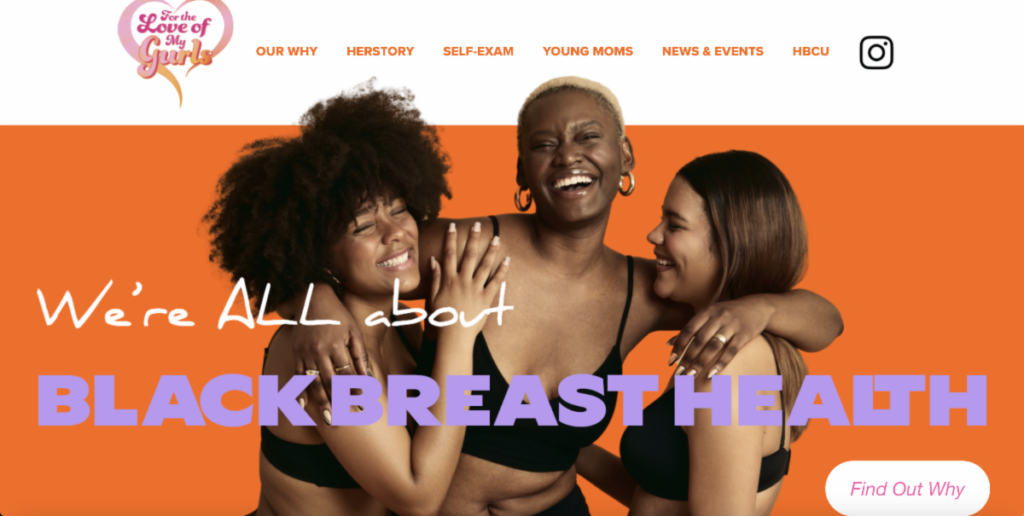
We are so excited that TOUCH’s For the Love Of My Gurls campaign has grown so much over the past two years that it has earned its own website. TODAY on Love Day, and the two year birthday of our For The Love Of My Gurls Campaign, we are launching …
Our mission is make Black breast health a priority by unlocking our HERstories and getting in touch with our gurls monthly. Stop what you are doing right now and visit loveofmygurls.org to see all that this campaign has to offer and learn what you can do today for Black breast health.
TOUCH, The Black Breast Cancer Alliance has partnered with Carebox to provide Breasties, caregivers, and the entire Black community with an easy way to search and match to breast cancer clinical trials.
RALEIGH, N.C., January 16, 2024 (Newswire.com) –
Carebox, a leading provider of clinical trial matching solutions, and the TOUCH, the Black Breast Cancer Alliance – which drives the collaborative efforts of patients, survivors, advocates, advocacy organizations, health care professionals, researchers and pharmaceutical companies to work collectively, with accountability, towards the common goal of eradicating Black Breast Cancer – today announced the launch of a Carebox Connect experience optimized for breast cancer patients.
The new web application gives patients, caregivers, and healthcare professionals an easy and effective way to search and match to breast cancer clinical trials.
Carebox Connect can now be accessed from the When We Tri(al) website as an integral part of the movement to increase the participation of Black women in clinical trials.
The Carebox Connect trial database is synchronized daily with the ClinicalTrials.gov clinical trial data maintained by the National Library of Medicine (NLM) at the National Institutes of Health (NIH). Applying its human-supervised AI, Carebox converts the unstructured text in ClinicalTrials.gov that describes eligibility criteria for enrollment into a searchable index of clinical criteria for matching with patient characteristics. This allows patients and families to complete a questionnaire about their particular diagnosis, treatment history, genetic testing, and other relevant information to then identify potentially relevant clinical trials automatically.
When We Tri(al) is about educating Black women about research with words they can spell from voices they can trust …
The questionnaire-based trial matching approach of Carebox Connect makes clinical research more accessible to our community.
Ricki Fairley
CEO and Co-Founder
TOUCH, the Black Breast Cancer Alliance
We are on a mission to advance the science for Black Breast Cancer.
We must get more Black Breasties into clinical trials to get drugs that have been tested on our bodies.
When We Tri(al) is about educating Black women about research with words they can spell from voices they can trust.
We are ecstatic to partner with Carebox.
The questionnaire-based trial matching approach of Carebox Connect makes clinical research more accessible to our community and gives us information to measure our impact.
Caroline Daigle, Carebox VP of Services, adds:
Increasing diversity in clinical trial participants is an FDA mandate and top-of-mind for our pharma company customers that sponsor clinical trials.
Objectives for diversity and inclusion can only be achieved when the drug research industry partners with leading communities of patients like the Black Breasties of TOUCHBBCA.
Our digital platform and call center navigators reach tens of thousands of patients every month in every community and segment of the patient populations for all conditions.
Every partner we add to the Carebox Connect Network extends that reach and brings the treatment options available only in clinical trials to the broadest audience.
We are proud to be able to support the wonderful work of TOUCHBBCA and will continue to expand our network of partners to reach as many patients as possible, especially those that have historically been underserved.
Us TOO International Prostate Cancer Education & Support
AASR (African American Prostate Cancer Disparity Program)
Support groups specifically for African American men with prostate cancer.
VOICES of Black Women (American Cancer Society)
A long-term study aiming to understand and improve the health of Black women, including cancer. They also provide resources and information.
Young Survival Coalition (YSC)
Resources for young Black women with breast cancer.
Women’s Cancer Resource Center
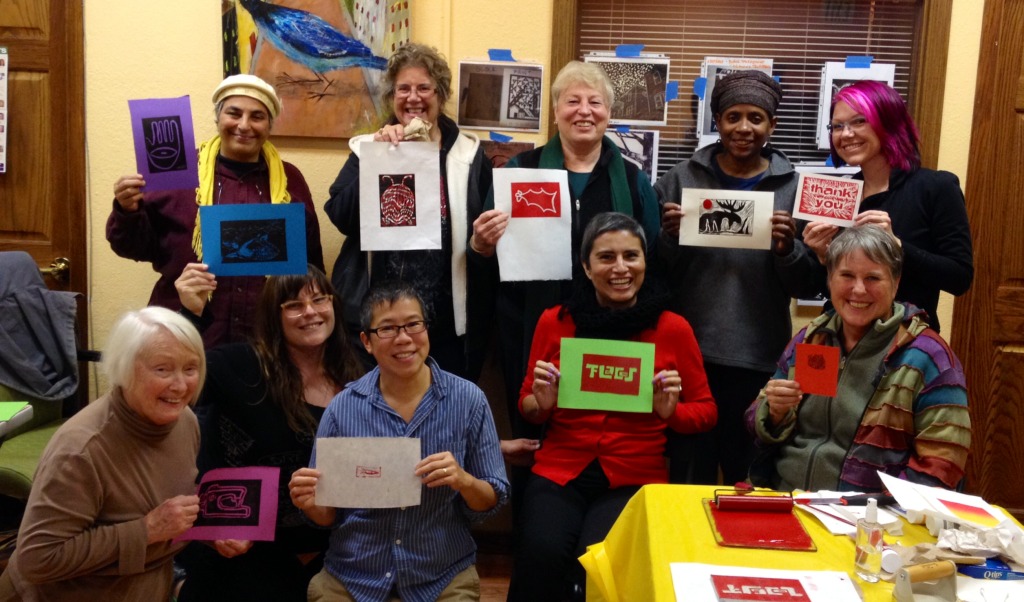
Women’s Cancer Resource Center creates opportunities for women with cancer to improve their quality of life through education, supportive services, and practical assistance. We help people with cancer navigate through the often overwhelming health care system so that you can get the appropriate care and treatment you need.
All of our programs and services are free.
-
- We provide information on cancer prevention and early detection.
- We help clients cope with the disease and treatment, as well as the challenges of caring for someone with cancer.
- We serve people with any cancer from all backgrounds, economic abilities, and ethnicities.
- Our clients include people with new diagnoses, in remission/survivorship, living with metastatic disease, and those receiving end of life care.
- We primarily serve women with cancer, but many of our wellness programs are available to everyone, regardless of gender, and whether or not they have cancer.
Offers free services to all women with any cancer. We also offer emergency financial assistance to low income people living in Alameda and Contra Costa counties in California through two programs:
The Faith Fancher Breast Cancer Emergency Fund provides financial support of up to $600 to low-income people actively in treatment for breast cancer and living in Alameda and Contra Costa counties in California.
The Lindy Fund provides financial support of up to $600 to low-income women and men actively in treatment for all types of cancer (except breast) and living in Alameda and Contra Costa counties in California.
To apply for emergency financial assistance, please call us at 510 420 7900. We will work with you and a social worker to get you the referral you need.
Our programs include:
- Referrals to community resources in English and Spanish
- Wellness workshops
- In-home support
- Psychotherapy and support groups
- Emergency financial support
Women’s Cancer Resource Center is located in Oakland in the San Francisco Bay Area of California. While we primarily serve people in Alameda and Contra Costa Counties, our Information and Referral Helpline — (510) 420-7900 — is available to anyone, anywhere. Our helpline is open Monday through Friday, 10 am to 4 pm.
Business Line/Staff: 510.601.4040
Español: 510.809.0215
Sister to Sister: 510.809.0212
Fax Number: 510.809.0240
[email protected]
ACCEPTS VIRTUAL CLIENTS
2908 Ellsworth Street
Berkeley, California 94705
ZERO Prostate Cancer
Provides prostate cancer education resources and support groups specifically for Black men through their “Black Men’s Prostate Cancer Initiative.” This includes remote support groups led by licensed mental health professionals and a podcast series addressing health equity and the emotional aspects of a diagnosis.
Leave a Reply